Kellie is a writer and editorial strategist covering topics in travel, trivia, nature, and more. When she's not writing you can find her drinking Diet Coke.
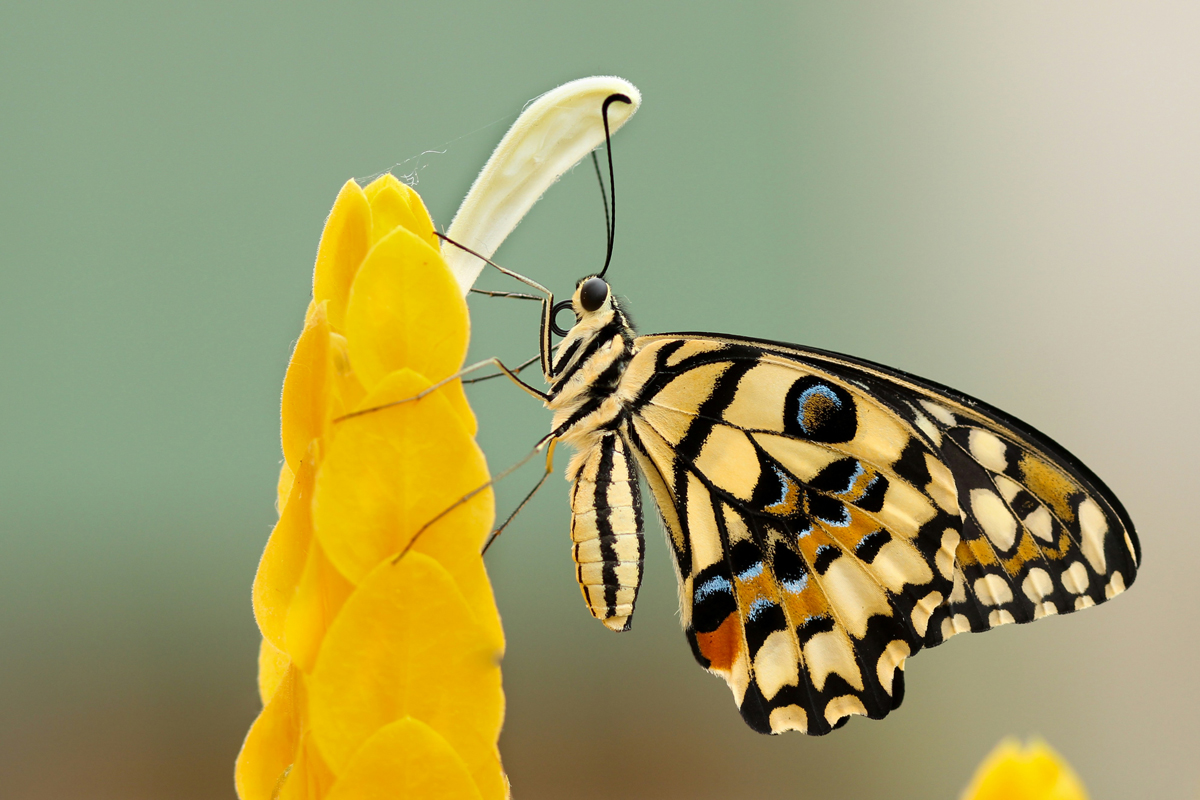
Humans rely on our tongues to taste food, but butterflies take a very different approach. While they do have a few taste receptors on their proboscis — the long, straw-like mouth they use to sip nectar — most of their taste sensors are located on their feet. In other words, every landing is also a taste test.
When a butterfly touches down on a flower, leaf, or even a patch of mud, specialized receptors on its feet instantly sample the surface. These tiny taste buds help butterflies locate nectar-rich flowers and, just as importantly, determine whether a plant is suitable for laying eggs. After all, once the eggs hatch, hungry caterpillars will need a nutritious first meal, so choosing the right plant can make all the difference.
Kellie is a writer and editorial strategist covering topics in travel, trivia, nature, and more. When she's not writing you can find her drinking Diet Coke.
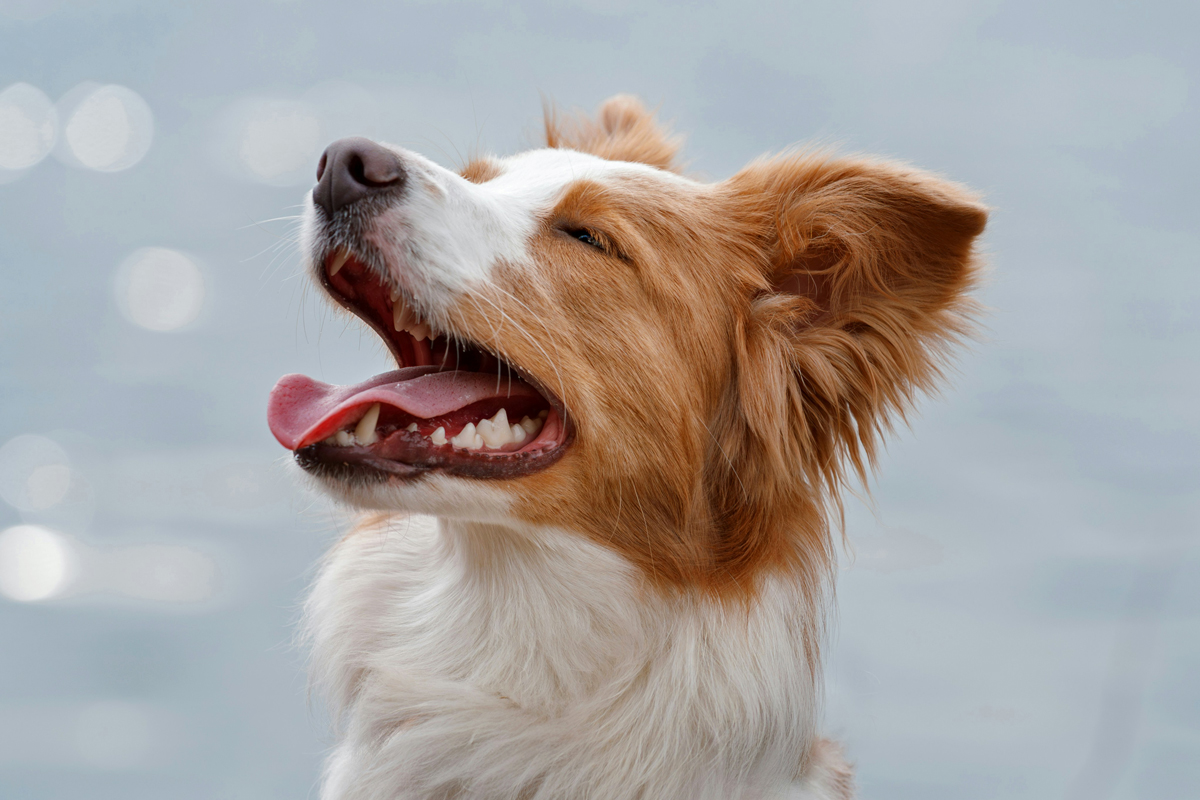
Much like human fingerprints, the pattern of ridges and grooves on a dog’s nose is believed to be unique to each individual pup. Kennel clubs have used nose prints as a form of identification for decades, and recent research has begun to put that long-held belief to the test. One study found that a puppy’s nose print is fully developed by the time they’re two months of age, and remains stable as the dog grows. These prints were run through a biometric algorithm and shown to be different from every other examined dog’s.
What about paw prints? Dogs’ paw pads also contain distinctive ridges, loops, and whorls, but scientists haven’t yet determined whether those patterns are unique enough to reliably identify individual dogs. For now, if you’re looking for a canine equivalent of a fingerprint, the nose is still the best bet.
Advertisement
5 Fascinating Fish Only Found in Reefs
Fish 22/07/26Jul. 22, 2026
Updated 22/07/26Jul. 22, 2026
Image Credit: Getty Images/Unsplash.com
Jill Layton
Author
Jill Layton has spent over a decade writing professionally for outlets like PEOPLE, Scary Mommy, HuffPost, The Dodo, Best Products, and House Outlook, plus a stint writing radio ads and ghostwriting for a comedian — don’t tell anyone. She lives in California with her two young kids and old lady dog.
Coral reefs cover less than 1% of the ocean floor. That’s it. Yet that sliver of seafloor has produced some of the most specialized fish on Earth. Every inch of coral is occupied, defended, or fought over. Millions of years of that competition have produced creatures that build their own beaches, manufacture their own blue pigment, and hunt with a second set of jaws. Here are five reef species whose survival strategies are stranger than they first look.
Image Credit: Westend61/Adobe Stock
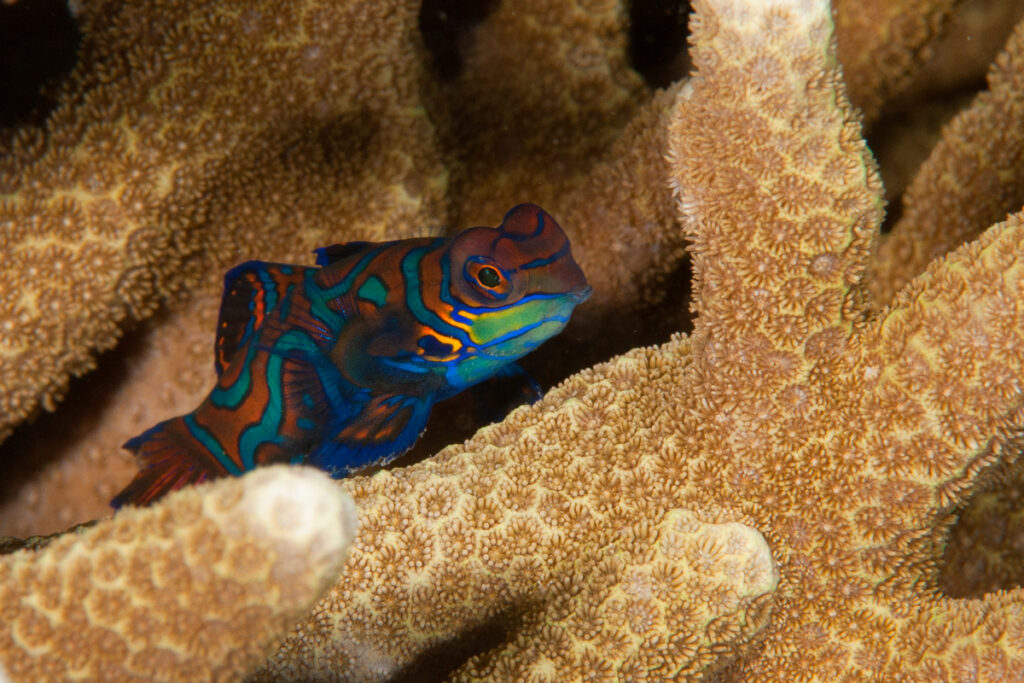
The Mandarinfish Doesn’t Need Scales
Most fish rely on scales for protection, but the mandarinfish skipped that step entirely. Its skin is covered in a thick mucus instead, one that wards off parasites and tastes bad enough that predators spit the fish back out after a single bite. Nobody’s going back for seconds.
The color is the real surprise, though. Mandarinfish are one of only a few known vertebrates that produce true blue pigment in their own skin. Almost every other blue animal on Earth only looks blue because of how light bounces off microscopic structures, not because of the actual pigment. The mandarinfish just makes the color itself, no tricks of light required, which is a strange flex for a fish that also smells terrible up close.
Image Credit: imageBroker/Adobe Stock
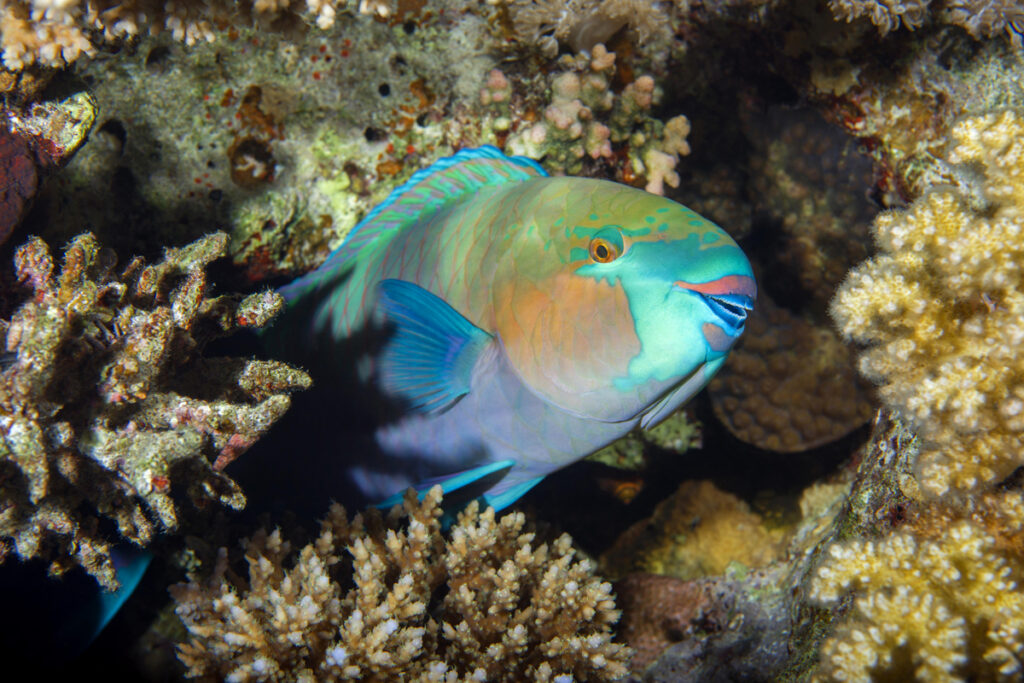
The Parrotfish Builds Beaches
A parrotfish spends most of its day scraping algae off dead coral with a beak built for the job. Along with the algae, it grinds up bits of coral rock, and what comes out the other end is sand. Real sand, the kind you might find under your beach towel. A single fish can produce more than 100 pounds of sand a year, and on some tropical islands, a good chunk of the beach exists because of this exact process.
At night, some species take it a step further and wrap themselves in a mucus cocoon before falling asleep, fully encased in a bubble made of their own spit. Researchers think it masks their scent from nighttime hunters like moray eels. Whatever the reason, the parrotfish doesn’t seem to mind sleeping inside a bag it made out of its own mouth.
Image Credit: marrio31/Getty Images
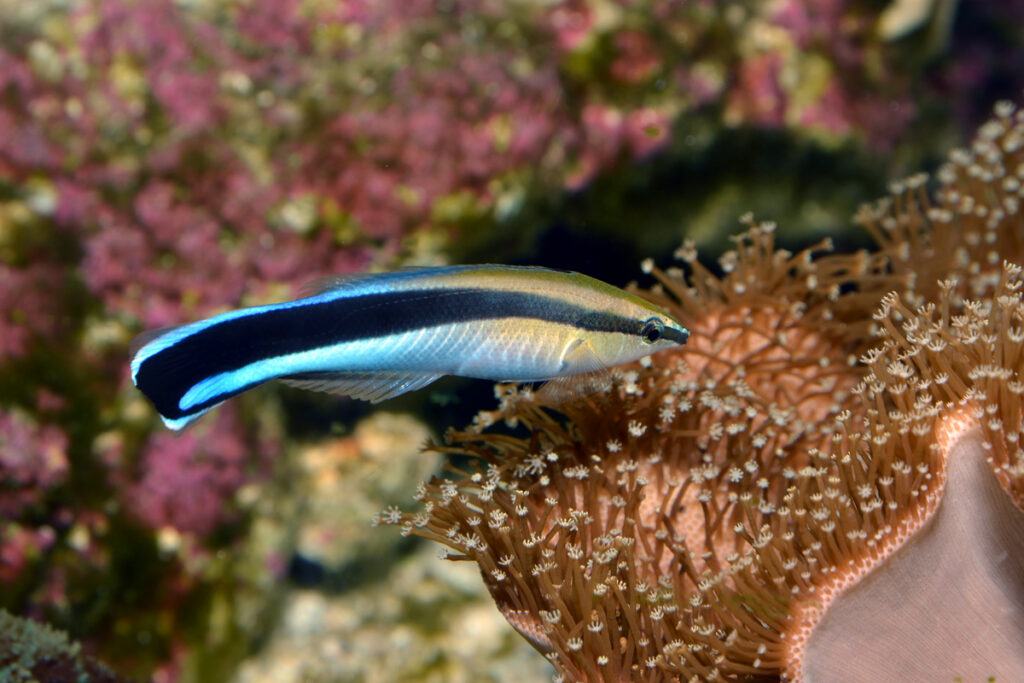
Cleaner Wrasses Keep the Reef Running
Cleaner wrasses set up permanent cleaning stations on the reef, and other fish, including predators, line up and wait their turn. The wrasse has a thriving business picking off parasites and dead tissue, sometimes swimming directly into a client’s mouth or gill chamber to finish the job. One wrasse can service well over a thousand fish in a single day.
The cleaning stations are so reliable that another reef fish evolved to take advantage of them. The sabre-toothed blenny closely resembles a cleaner wrasse and copies its behavior well enough to fool unsuspecting visitors. Fish expecting a routine cleaning instead receive a quick bite before the imposter disappears.
Image Credit: Getty Images/Unsplash.com
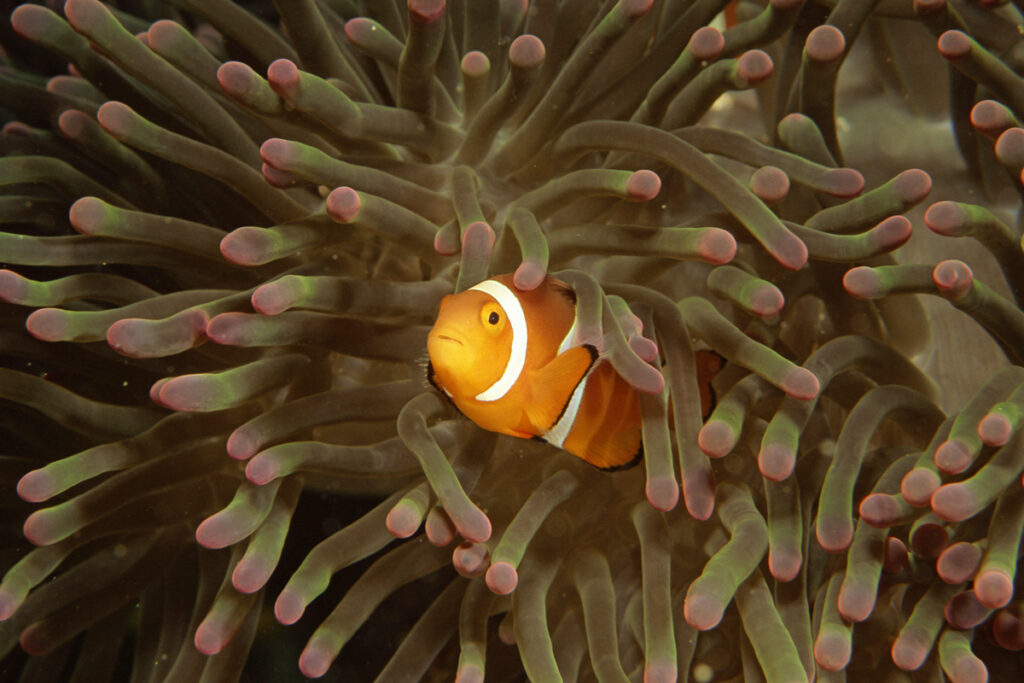
Clownfish Live in a Strict Social Hierarchy
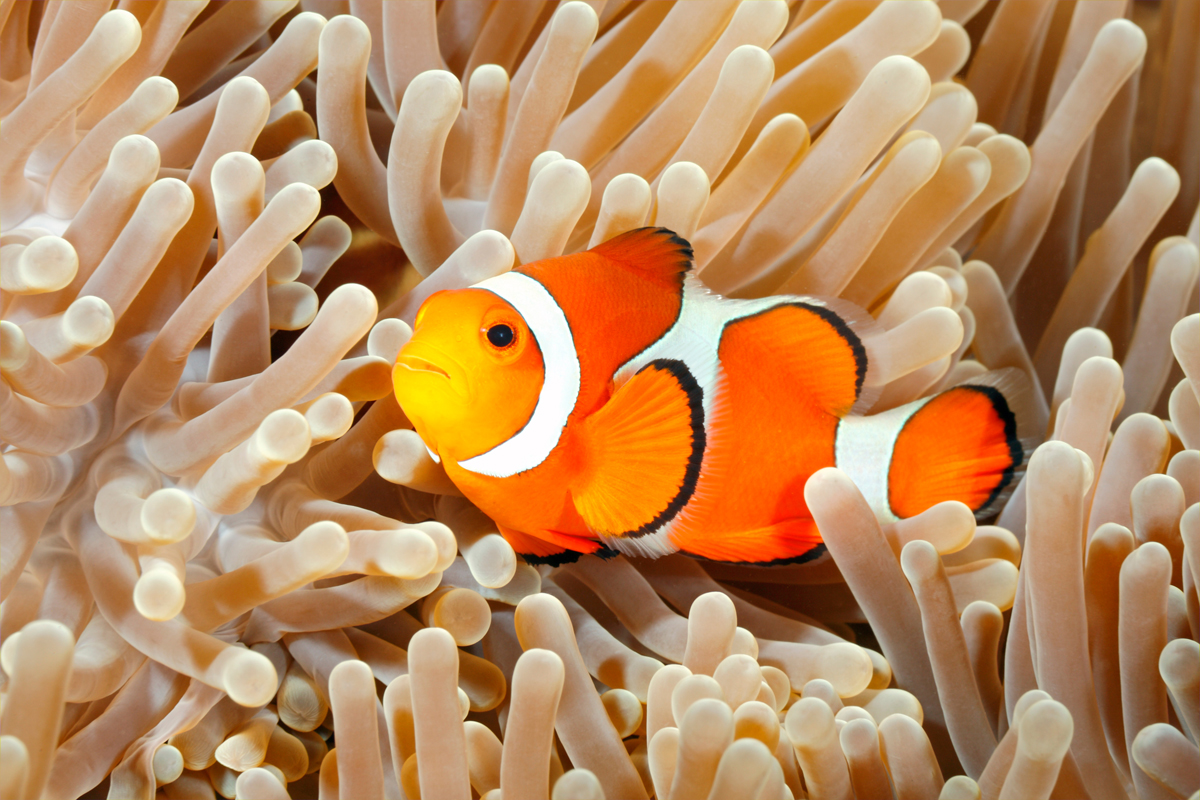
Every clownfish begins life as a male. No exceptions. Within a group, the largest fish eventually becomes the breeding female, and the second-largest becomes her mate. Everyone else stays immature and waits.
If the female dies, nobody grieves for long. The dominant male changes sex, takes her place, and the next fish in line gets bumped up to breeding male. It’s one of the best-documented examples of sequential hermaphroditism in the animal kingdom, and it means the whole group can keep reproducing without ever needing a newcomer.
Image Credit: David Clode/Unsplash.com
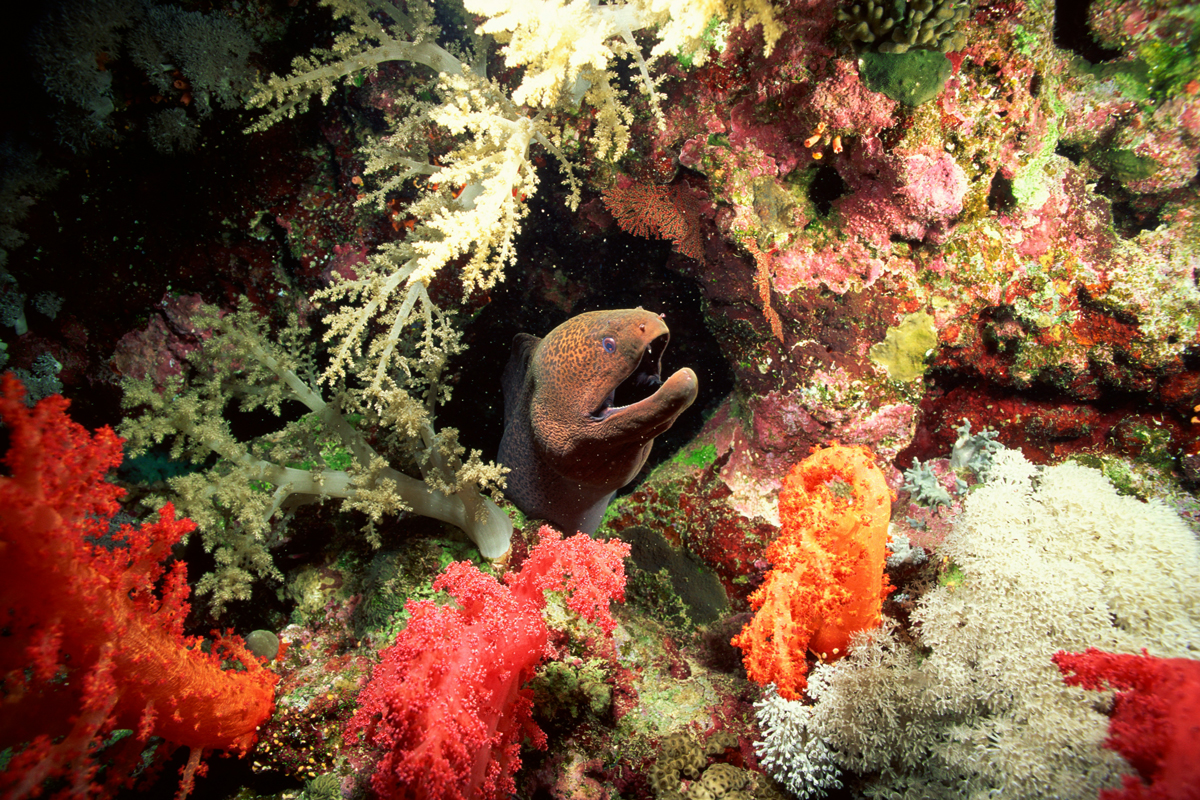
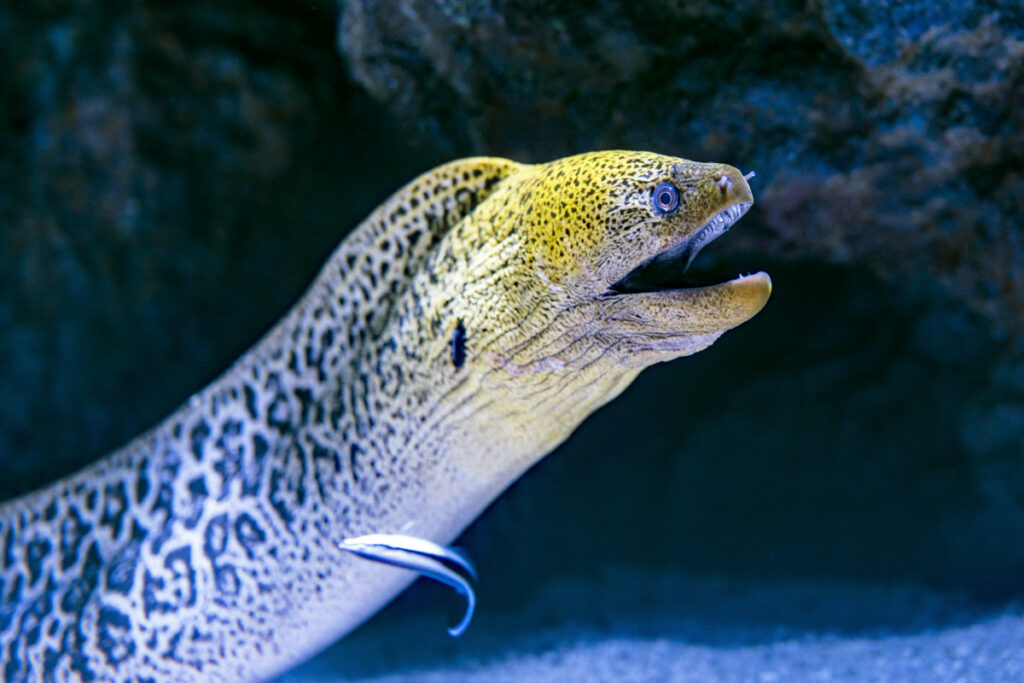
Moray Eels Hide a Second Set of Jaws
Most fish feed by sucking prey in with water pressure, but moray eels aren’t built for that. Instead, they rely on a second, independent set of jaws tucked deep in the throat. The outer jaws grab hold of a fish or octopus, and then the inner jaws shoot forward, seize the prey, and haul it back toward the esophagus.
Scientists didn’t fully understand this feeding mechanism until 2007, when a high-speed video revealed what was happening inside the eel’s mouth. Before that, morays were just assumed to feed like everything else. These pharyngeal jaws remain one of the strangest feeding adaptations known in any vertebrate, and they’d been hiding in plain sight in aquarium tanks for decades before anyone thought to look closely.
Reefs make up a tiny fraction of the ocean, and yet they’ve produced a fish that manufactures its own pigment, a fish that builds beaches, and a fish with a mouth inside its mouth. Small advantages add up fast when every inch of coral is spoken for. Whatever’s still undiscovered down there is probably stranger than any of this.
Advertisement
All Clownfish Are Born Male
Fish 22/07/26Jul. 22, 2026
Updated 22/07/26Jul. 22, 2026
Image Credit: cbpix/Adobe Stock
Kellie Stewart
Author
Kellie is a writer and editorial strategist covering topics in travel, trivia, nature, and more. When she's not writing you can find her drinking Diet Coke.
Every clownfish begins life as a male, but not every clownfish stays that way. Living among sea anemones, clownfish form strict social hierarchies led by a single, dominant breeding female. Just below her is the largest male, who serves as her mate, while the remaining males occupy lower ranks and do not reproduce.
If the breeding female dies, the social order shifts almost immediately. The dominant male undergoes a remarkable transformation, changing sex to become the new breeding female. Another male then moves up the ranks to become her mate. This strategy, known as sequential hermaphroditism, ensures the group can continue reproducing without waiting for a new female to arrive.
Jill Layton has spent over a decade writing professionally for outlets like PEOPLE, Scary Mommy, HuffPost, The Dodo, Best Products, and House Outlook, plus a stint writing radio ads and ghostwriting for a comedian — don’t tell anyone. She lives in California with her two young kids and old lady dog.
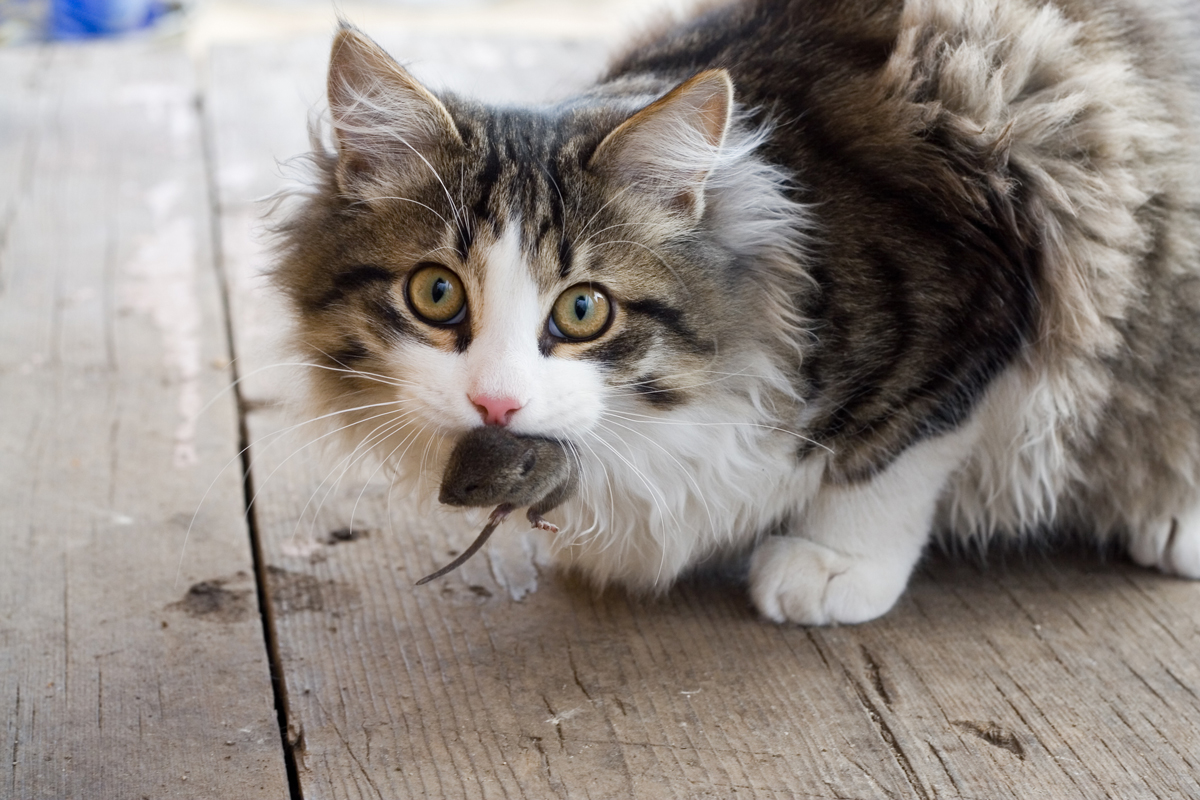
There’s a common misconception that cats bring dead animals home as gifts for their humans — their cat-like way of saying, “Thanks for loving me.” In reality, this behavior is driven by millions of years of hunting instinct, with your home serving as the safe place where a wild cat would have carried its catch.
Domestic cats may sleep on the couch and eat from a bowl, but many of the survival behaviors that helped their wild ancestors thrive remain remarkably intact. Bringing prey home isn’t about affection so much as instinct playing out in a modern setting.
Image Credit: Christian Cacciamani/Unsplash.com
Cats Are Natural Hunters
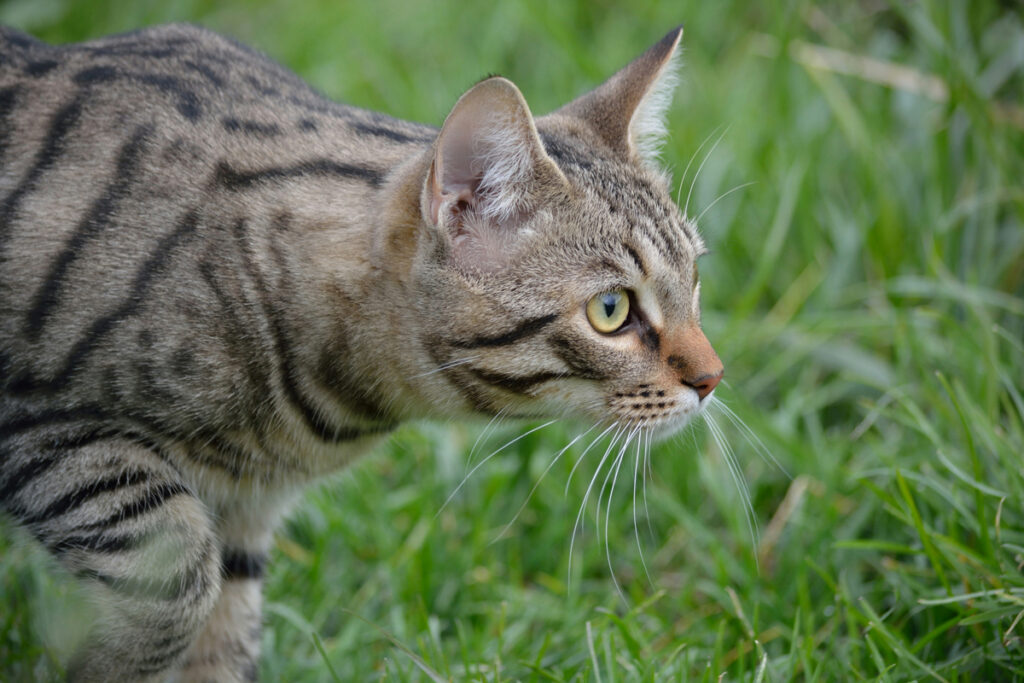
The instinct to stalk, chase, catch, and kill prey is deeply ingrained, whether they’re hungry or not. That’s why a house cat that just finished a full meal will still spend 20 minutes stalking a fly across the living room.
Hunting and eating are two separate behaviors. A cat may kill prey without intending to eat it immediately and, instead, carry the catch somewhere that feels safe. For domestic cats, that place is usually home, which is why prey often turns up beside the bed, on the doorstep, or in the middle of the living room.
African wildcats, the closest living relatives of the modern house cat, as reported by National Geographic, typically drag their kills into vegetation or other sheltered spots before eating, reducing the chances that another predator or scavenger steals the meal. Housecats don’t have to worry about hyenas anymore, or much of anything besides maybe the neighbor’s dog, but the instinct never got the memo.
Image Credit: Amber Kipp/Unsplash.com
The Instinct May Be Left Over From Motherhood
One of the leading theories ties this behavior back to how mother cats raise their kittens. African wildcat mothers introduce prey to their kittens in stages — first dead, then injured, then alive — so the kittens gradually learn to hunt on their own before leaving to fend for themselves.
Domestic cats seem to be running the same program, even when there aren’t any kittens around. Spayed and neutered cats do this, too, as do plenty of males who never raised a litter. That suggests the behavior isn’t simply the result of maternal experience but a deeply ingrained instinct.
Image Credit: iggii/Unsplash.com
Bringing Prey Indoors Is Also Just Practical
There’s also a practical explanation. Outdoors, prey left unattended can easily be stolen before a cat finishes eating it. Bringing it into a protected space — whether that’s dense vegetation for an African wildcat or a living room for a house cat —reduces that risk. Your home simply functions as the safest territory available.
Not every cat does this, and that’s worth noting, too. Some cats rarely bring anything home, while others do it constantly. Personality, hunting success, how much outdoor access a cat has, and plain individual preference all seem to play a role in how often it happens, which tracks with how differently individual cats seem to approach almost everything else.
Image Credit: Mikhail Vasilyev/Unsplash.com
The Prey May Not Be Meant for You
There’s also a decent chance none of this is a message in the first place. In multi-cat households and feral colonies, cats have been observed carrying prey into shared spaces before deciding whether to eat it. That’s a cat-to-cat behavior, not a cat-to-person one.
Researchers still don’t know the full answer, but there’s little to suggest a cat delivering a dead animal is trying to reward, thank, or judge anyone standing nearby. More likely, it’s a handful of instincts firing at once: the drive to hunt, the drive to protect the catch, and the drive to return to somewhere familiar, all pointed at the same doorstep by coincidence rather than intention.
Cats have spent thousands of years adapting to life alongside people, but the African wildcat underneath never really left. Every mouse on the doormat is a reminder that domestication changed where cats sleep, not the instincts that helped them survive.
Kellie is a writer and editorial strategist covering topics in travel, trivia, nature, and more. When she's not writing you can find her drinking Diet Coke.
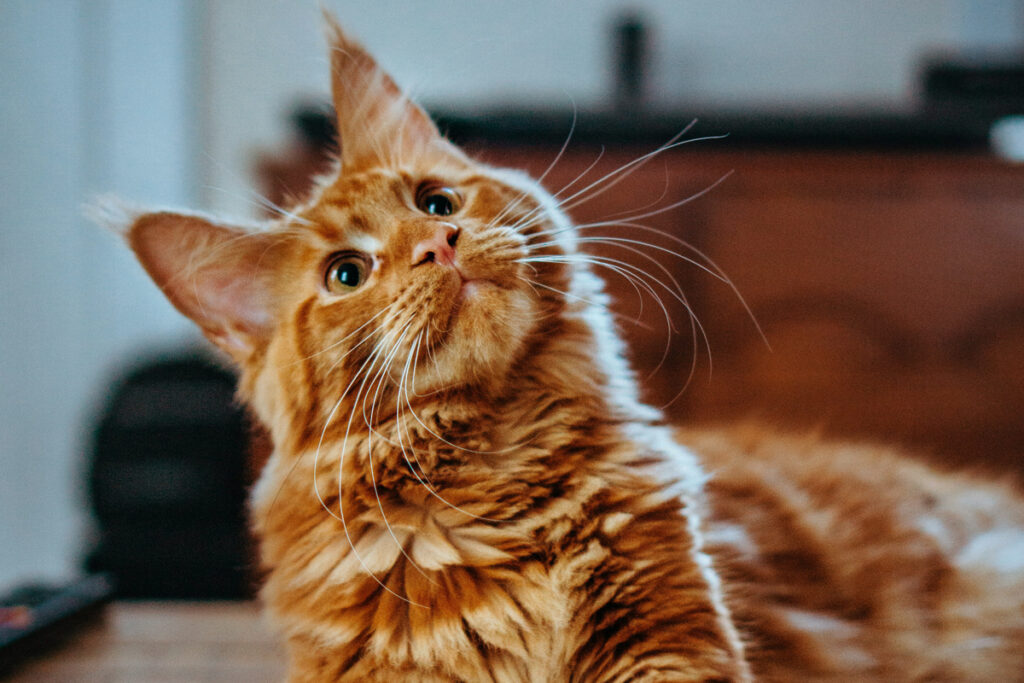
Cats have a reputation for being sweet on their own terms, but there’s one kind of sweetness they never experience. Unlike humans and most other mammals, cats can’t taste sweet flavors at all. Because their wild ancestors evolved as strict carnivores, detecting sugar from fruit or other carbohydrates wasn’t truly necessary. Over time, the gene responsible for producing one of the receptors needed to detect sweetness disappeared.
Cats also have far fewer taste buds than humans — around 500 compared to our 9,000. That doesn’t mean food is flavorless to them. They can still detect sour, salty, bitter, and umami, and may even enjoy foods we find surprisingly bland. So if your cat ignores a marshmallow but comes running for tuna, it’s simply tasting the world exactly as evolution intended.
Advertisement
Great White Sharks Can Detect a Drop of Blood in an Olympic-Sized Swimming Pool
Fish 22/07/26Jul. 22, 2026
Updated 22/07/26Jul. 22, 2026
Image Credit: Getty Images/Unsplash.com
Bennett Kleinman
Author
Bennett Kleinman is a New York City-based staff writer for Inbox Studio. He is also a freelance comedy writer, devoted New York Yankees and New Jersey Devils fan, and thinks plain seltzer is the best drink ever invented.
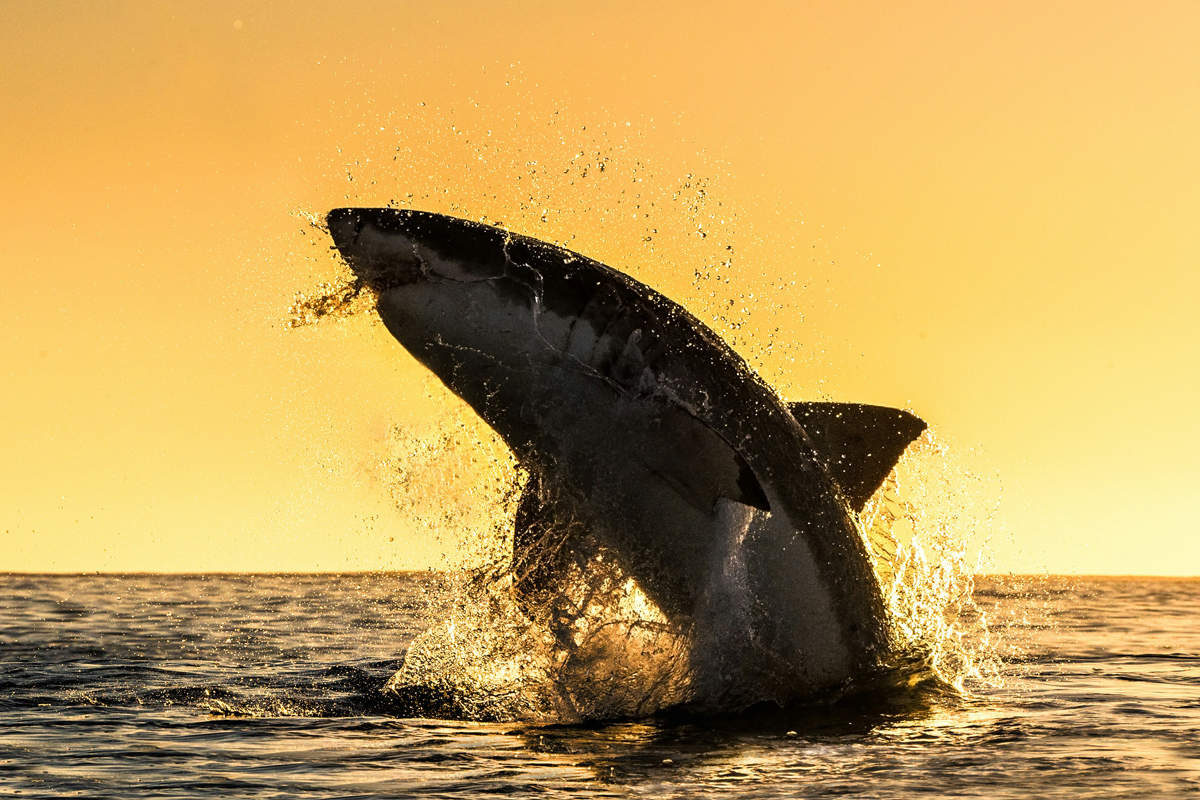
Galeophobia is a surprisingly common fear of sharks in swimming pools, though thankfully, the odds of finding a Great White in the pool are slim to none. However, if a shark were to make its way into a pool, it’d have no trouble tracking down anyone with a fresh wound. That’s because sharks boast an incredibly powerful sense of smell, and can detect a single drop of blood in an Olympic-sized swimming pool.
Olympic-sized pools hold 660,430 gallons of water, and a drop of blood would be imperceptible to the naked eye. But a shark’s nose is highly sensitive, and used solely for smelling rather than breathing. This allows some sharks to detect the smell of blood or prey at one part per 10 billion, and in many cases from hundreds of feet away — or the length of several football fields, to use another sports analogy.
Advertisement
6 of the Most Sensitive Noses in Nature
Across Species 22/07/26Jul. 22, 2026
Updated 22/07/26Jul. 22, 2026
Image Credit: Patrick Baum/Unsplash.com
Bennett Kleinman
Author
Bennett Kleinman is a New York City-based staff writer for Inbox Studio. He is also a freelance comedy writer, devoted New York Yankees and New Jersey Devils fan, and thinks plain seltzer is the best drink ever invented.
If real animals could talk like Toucan Sam, the fictional cereal mascot, they’d likely repeat his iconic catchphrase “follow your nose!” Many creatures rely on their highly sensitive noses more than their eyes and ears to find food, detect predators, or navigate their surroundings. Some critters are even able to perceive odors from miles and miles away. Let’s take a closer look at six of the most sensitive schnozzes you’ll find in the animal kingdom.
Image Credit: Stephan Bechert/Unsplash.com
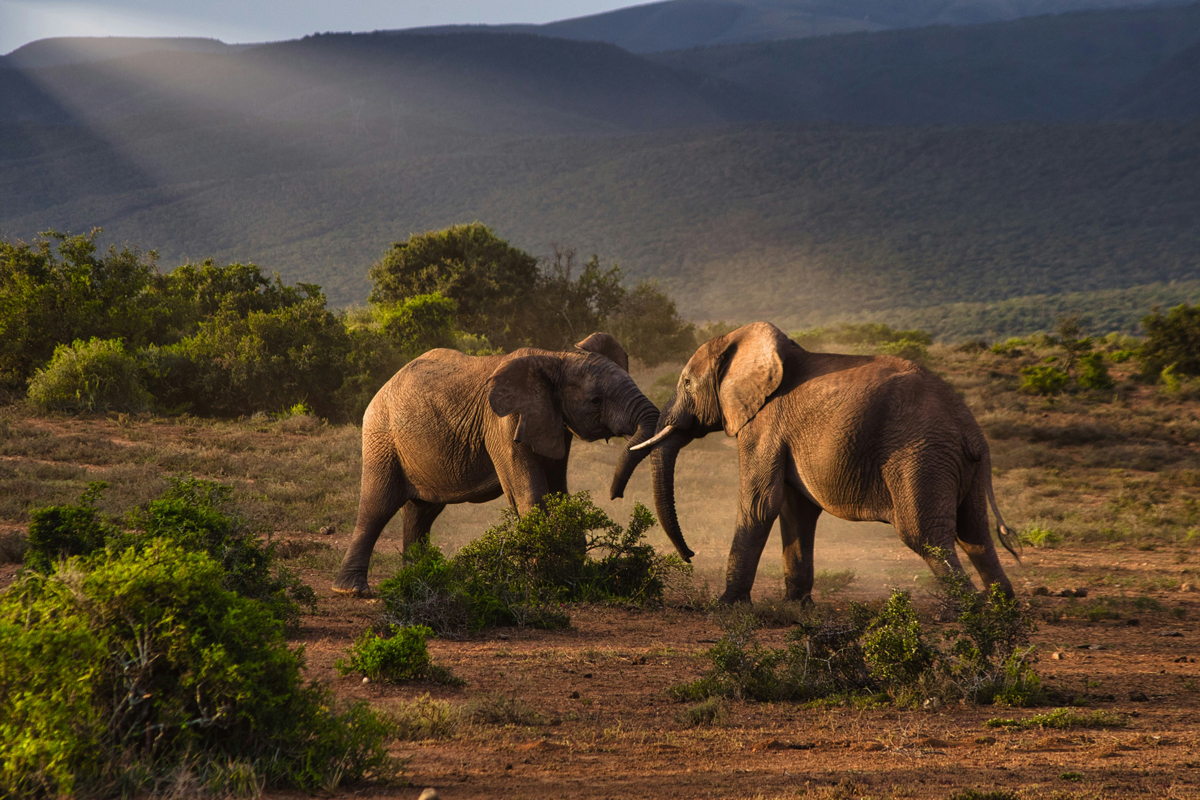
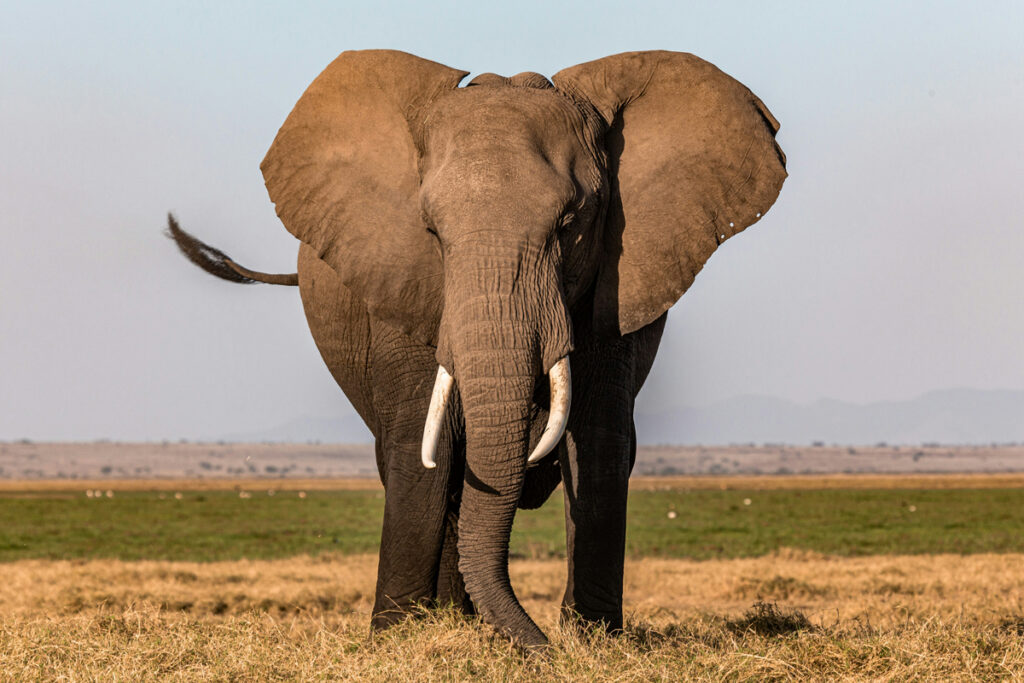
African Elephants
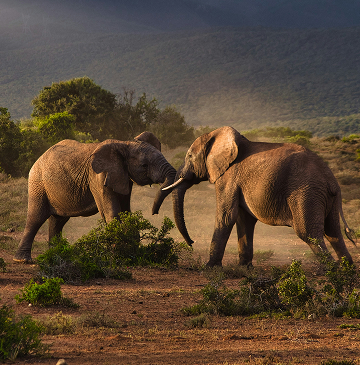
The African elephant is arguably the most sensitive sniffer in the animal kingdom, as it has the keenest sense of smell of any mammal studied to date. A 2014 study determined that African bush elephants have roughly 2,000 olfactory receptor genes — components in a creature’s genetic makeup responsible for their sense of smell. To put the number in perspective, that’s roughly 67% more olfactory receptor genes than in rats, 150% higher than many dogs, and roughly five times more than the average human.
One of the most impressive ways in which elephants use their sense of smell is to detect water. In fact, they can smell water from up to 12 miles away. Furthermore, not only can elephants use their noses to detect food sources, but they’re also able to detect quantities of food through smell alone, ensuring they know where to find the most sustenance.
Image Credit: Matt Limb OBE/Alamy
Bloodhounds
Bloodhounds are so trusted for their sense of smell that they were the first animal whose evidence was made legally admissible in U.S. courts. These talented pooches possess a staggering 230-300 million olfactory cells (the sensory neurons that transmit chemical signals to the brain) in their nasal cavity — about 40 times more than humans.
Furthermore, bloodhounds have an olfactory center in their brain that’s about the size of a handkerchief, which is critical for processing those chemical signals triggered by smell. In humans, that same olfactory center is the size of a postage stamp. Last but not least, bloodhounds use their loose facial skin and long ears to trap and keep odors closer to their face, allowing them to hold onto and follow scents over long distances.
Image Credit: Milos Prelevic/Alamy
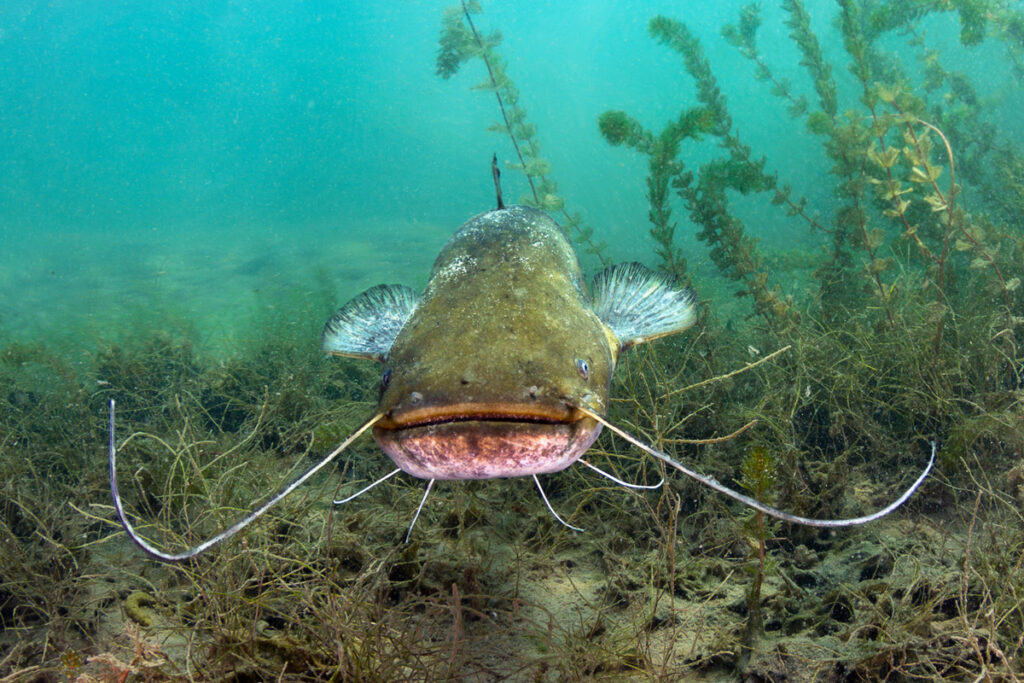
Catfish
While they may lack a protruding nose or snout like you’d find in many land vertebrates, catfish are still among the most capable sniffers. When it comes to detecting odor, these aquatic creatures rely on two openings in the front of their face called nares, which they use explicitly for smelling and not breathing. Beyond those holes is the olfactory rosette, which are tissues that detect smell arranged in a rose-like pattern (hence their name). A catfish has 140 folds within the rosette — more than any other freshwater fish — and the more folds there are, the greater the surface area to detect and process smells.
Catfish use their strong sense of smell to perceive potential danger, find their way home, detect other fish, and track down food. They can even detect certain smells at as little as 0.00017 parts per million. To put this in perspective, that means they can detect a single teaspoon of an odor within a pond that’s one-acre in surface area and three-feet deep.
Image Credit: Tandem Stock/Adobe Stock
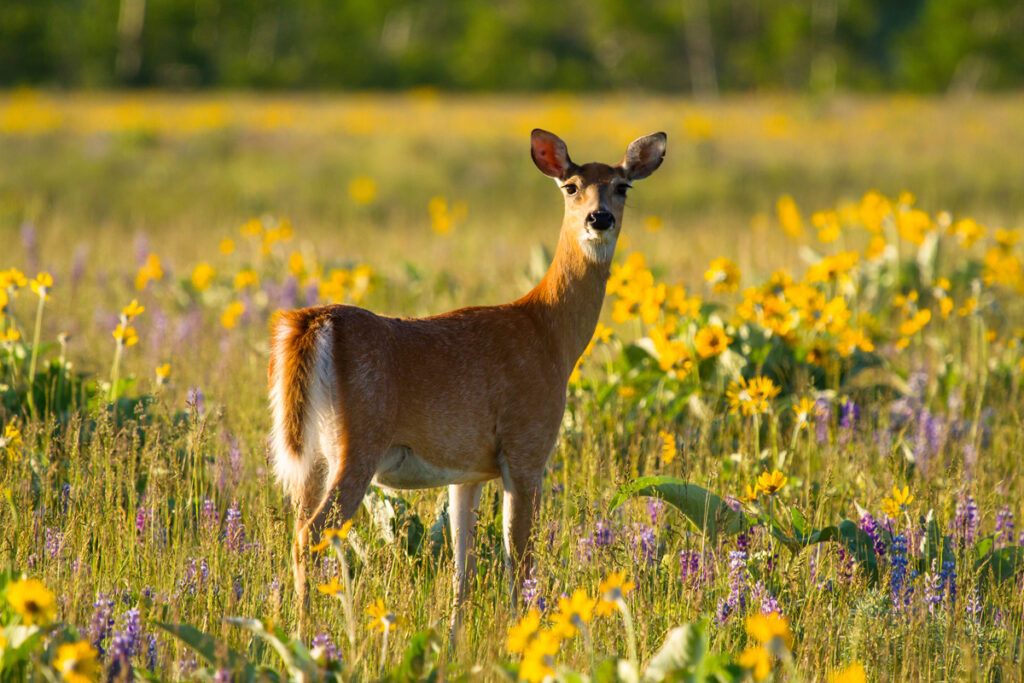
Whitetail Deer
Whitetail deer have an incredible acuity to pick up scents from over a half mile away. It’s due, in part, to the 290 million or so olfactory cells present in an average whitetail deer’s nasal cavity. These deer also boast olfactory centers in their brains that are roughly four times larger than the same type of odor-processing centers in humans.
Another element that makes whitetail deer such keen smellers is a concept called “stereo olfaction.” It has to do with a deer’s nostrils, which are situated in such a way that a deer can detect whether the smell is coming from the left or right. It allows deer to determine where danger may be lurking, and avoid it accordingly. Whitetail deer also have a separate organ capable of detecting scents in addition to their nose, and it’s known as the vomeronasal organ. This organ is located in the roof of the mouth, and can pick up nearby pheromones with ease.
Image Credit: Daniel Quiceno M/Unsplash.com
Cows
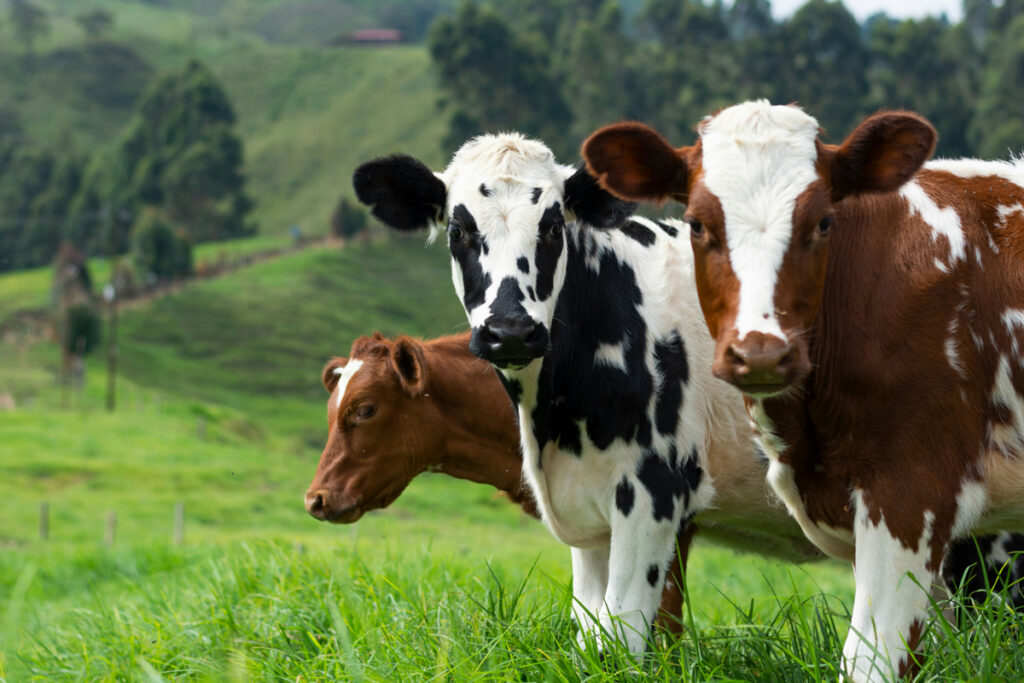
Anyone who’s ever passed a cow farm may plug their nose, considering the strong odors emanating from those piles of cow dung all over the place. But cows don’t seem to mind the smell, despite the fact they have a far keener sense of smell than humans. Cows have an estimated 1,071 olfactory receptor genes, give or take, which is roughly 2.5 times greater than humans.
Cows are able to easily detect and process a wide variety of scents. They can determine whether something is rancid, floral, hay-like, spicy, spearmint… the list goes on and on. They’re even known to detect those odors from up to six miles away. In addition to their noses, cows also have a vomeronasal organ in the roof of their mouths they use to detect odors, specifically scents related to reproductivity. To do this they perform what’s called the flehmen response, where they curl back their upper lip, bare their front teeth, inhale for several seconds, and suck pheromones towards the vomeronasal organ.
Image Credit: David Clode/Unsplash.com
Sharks
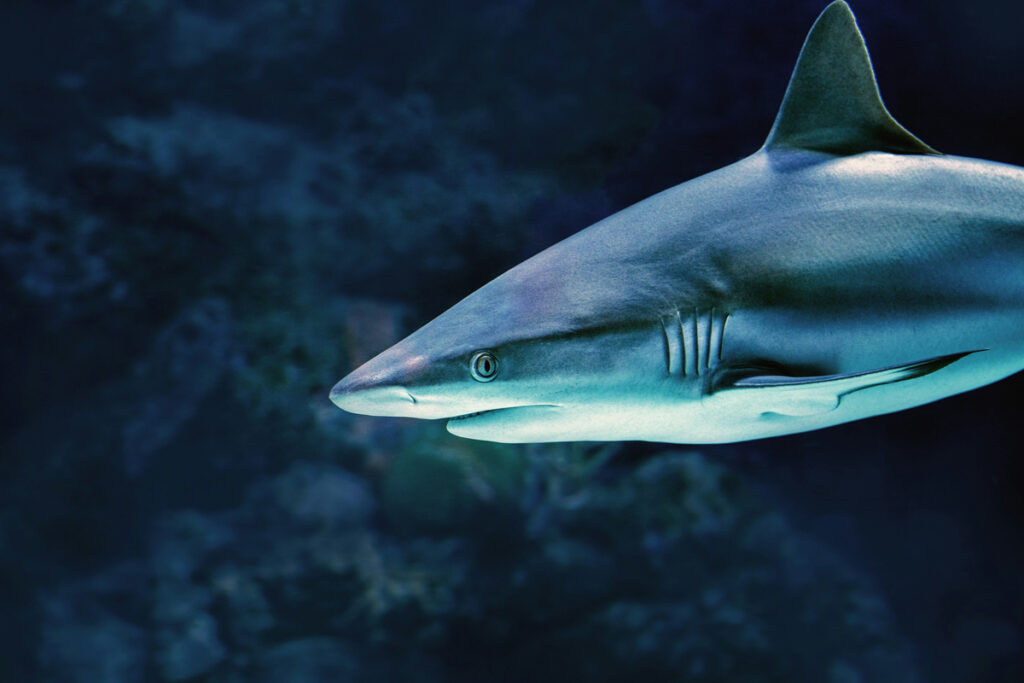
You can’t publish an article about sensitive noses without mentioning these mighty aquatic beasts. Sharks are quite adept when it comes to detecting odors, as two-thirds of their brain weight is dedicated to detecting smells. A shark’s nares are also completely disconnected from their respiratory system, and are used solely for smelling, which allows them to detect scents with greater precision. Sharks use this ability to track down potential predators, prey, mates, and to navigate low-light environments.
It’s widely known that sharks are attracted to blood, but it may surprise you to learn that sharks can detect one single drop of blood in one million molecules of water using scents alone. To put that into perspective, it’s like if you were walking for 16 straight miles, and could pinpoint a specific inch on the way. Or being able to pick out a precise minute over the course of two years.
Advertisement
A Shrimp’s Heart Is in Its Head
Fish 21/07/26Jul. 21, 2026
Updated 21/07/26Jul. 21, 2026
Image Credit: Alex Stemmer/Adobe Stock
Kellie Stewart
Author
Kellie is a writer and editorial strategist covering topics in travel, trivia, nature, and more. When she's not writing you can find her drinking Diet Coke.
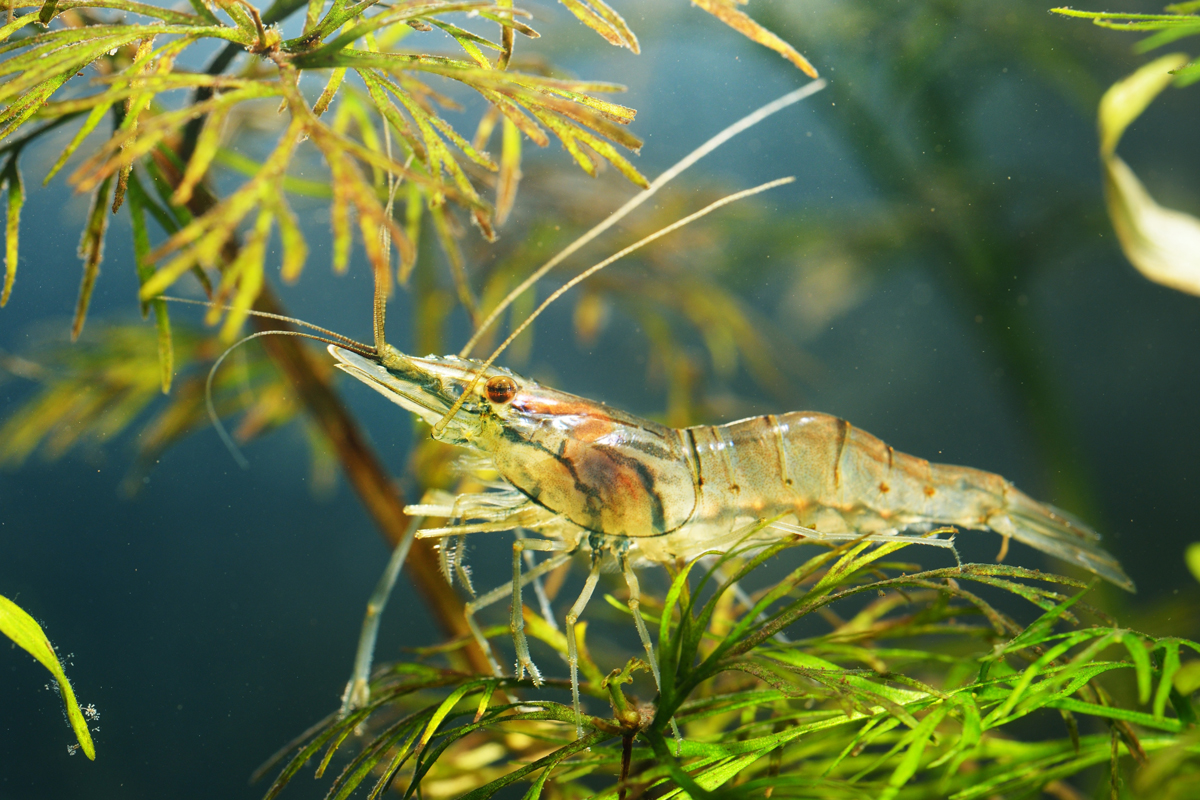
Shrimp may be small, but they have one of the strangest body plans in the animal kingdom. Their heart, for example, sits so close to the brain that it’s effectively inside the head. A shrimp’s heart is located inside the cephalothorax — the fused body section that combines its head and thorax beneath a hard protective shell. Since a shrimp doesn’t have a distinct neck separating its head from the rest of its body, the heart ends up sitting just behind the brain, making it appear as though it’s tucked inside its head.
Unlike humans, shrimp have an open circulatory system. Instead of pumping blood through a network of arteries and veins, their heart pushes a copper-rich fluid called hemolymph into open spaces surrounding their organs. This fluid delivers oxygen and nutrients before eventually making its way back to the heart to begin the cycle again. It’s an efficient design for the small crustacean.
Advertisement
How Do Animals Hold Their Breath So Long?
Across Species 17/07/26Jul. 17, 2026
Updated 17/07/26Jul. 17, 2026
Image Credit: adam hilles/Unsplash.com
Mike Diaz
Author
Mike Diaz is a Los Angeles-based television writer/producer who got his start making docuseries for National Geographic. Most recently, he wrote for Magnum P.I. and NCIS: Hawai'i on CBS.
Hundreds of millions of years ago, some early land animals returned to the water in search of new food sources. Today, our oceans, lakes, and rivers are teeming with air-breathing creatures uniquely adapted for life underwater. But how do air-breathing animals such as whales hold their breath for three hours or more? Why are turtles able to hibernate at the bottom of a lake for months on end without oxygen? Oxygen might be an essential part of life on Earth, but some creatures have found unique workarounds to allow them to survive in places where the element is scarce.
Image Credit: Stanislav/Adobe Stock
Marine Mammals
Whales, dolphins, seals, and other marine mammals all face the same challenge: they need oxygen to survive, yet spend much of their lives underwater. Over millions of years, they’ve evolved remarkable ways to hold their breath far longer than any human could.
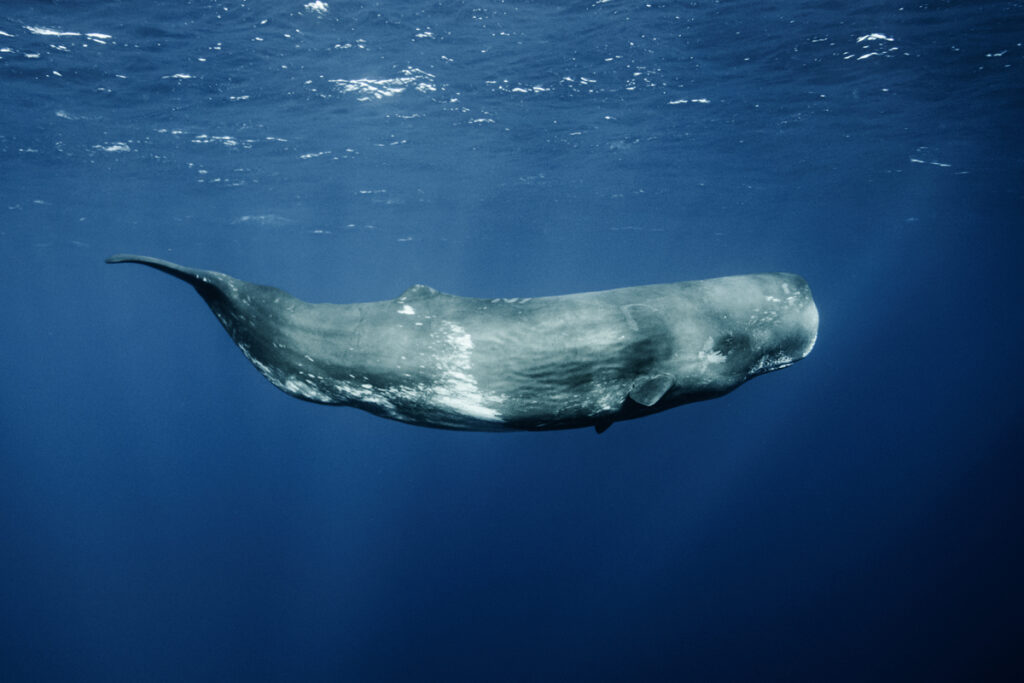
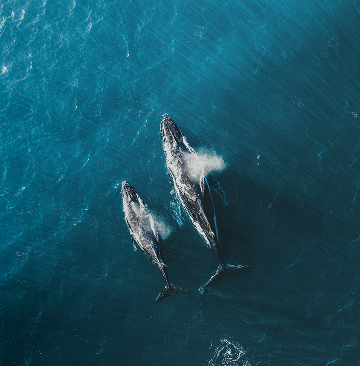
Some are especially impressive. Sperm whales, which hunt giant squid in the deep ocean, routinely stay underwater for around 90 minutes. The current record belongs to a Cuvier’s beaked whale, which remained submerged for an astonishing 222 minutes while diving nearly 2,000 meters. Even bottlenose dolphins, which make much shorter dives than whales, routinely hold their breath for up to 10 minutes and rely on the same oxygen-saving adaptations. To put things in perspective, the average person can only hold their breath between 30 to 90 seconds. Add any sort of exercise – like swimming – and that time shrinks. So, how do these creatures manage without air for so long?
It all comes down to efficient oxygen storage and management. Marine mammals store extraordinary amounts of oxygen in their blood and muscles. High concentrations of hemoglobin in the blood and myoglobin in the muscles allow them to carry and store far more oxygen than humans can. In whales, the effect is especially dramatic — their muscles are so rich in myoglobin that they appear almost black.
The other part of the equation is how these creatures metabolize oxygen. While diving, marine mammals undergo bradycardia, an adaptation that causes their heart rate to drop dramatically to conserve oxygen. Blood flow is redirected toward essential organs like the brain and hear, while nonessential functions such as the liver and kidneys, temporarily receive less blood. In one remarkable study, researchers recorded a blue whale’s heartbeat for the first time. During deep dives, its heart slowed to just four to eight beats per minute.
Image Credit: Ray Hennessy/ Unsplash.com
Reptiles For the Win
Marine mammals aren’t the only champions of underwater endurance. Reptiles have evolved some astonishing breath-holding abilities of their own. Alligators regularly hold their breaths for up to 30 minutes but some can even go 24 hours under the right conditions. Like diving mammals, they slow their heart rate thereby reducing their oxygen needs.
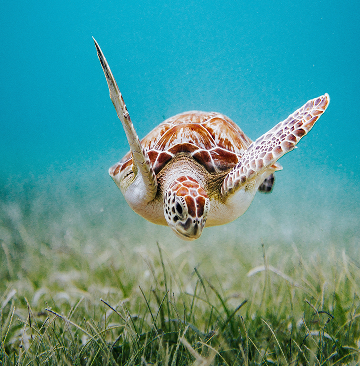
Sea turtles are equally remarkable. While resting, they can remain underwater for up to seven hours, and leatherback turtles routinely dive to incredible depths. One individual was recorded descending more than 1,200 meters (3,937 feet). Like whales, they slow their heart rate and use flexible lungs that collapse safely under immense pressure.
One major advantage reptiles have over mammals is that they’re ectothermic, or cold-blooded. Because they don’t expend energy maintaining a constant internal body temperature, their metabolism is much lower than that of mammals. That means they require less oxygen to begin with — a huge advantage when every breath counts.
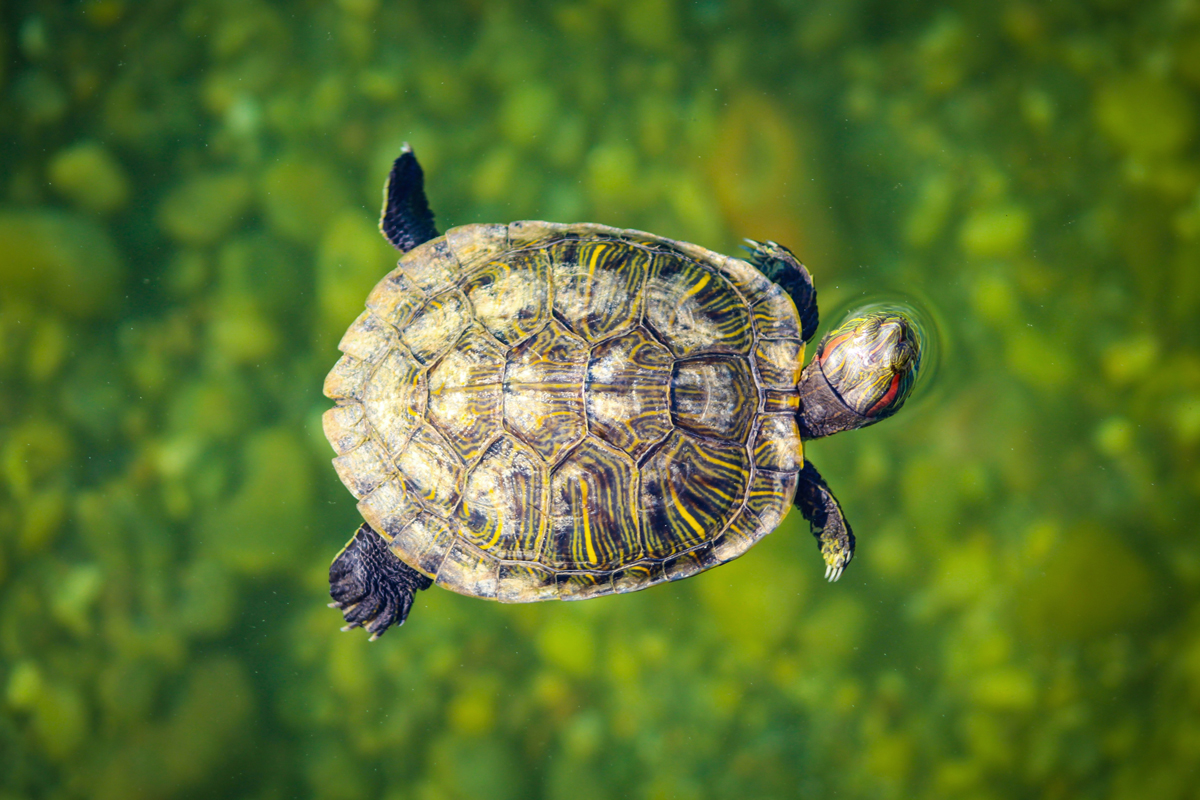
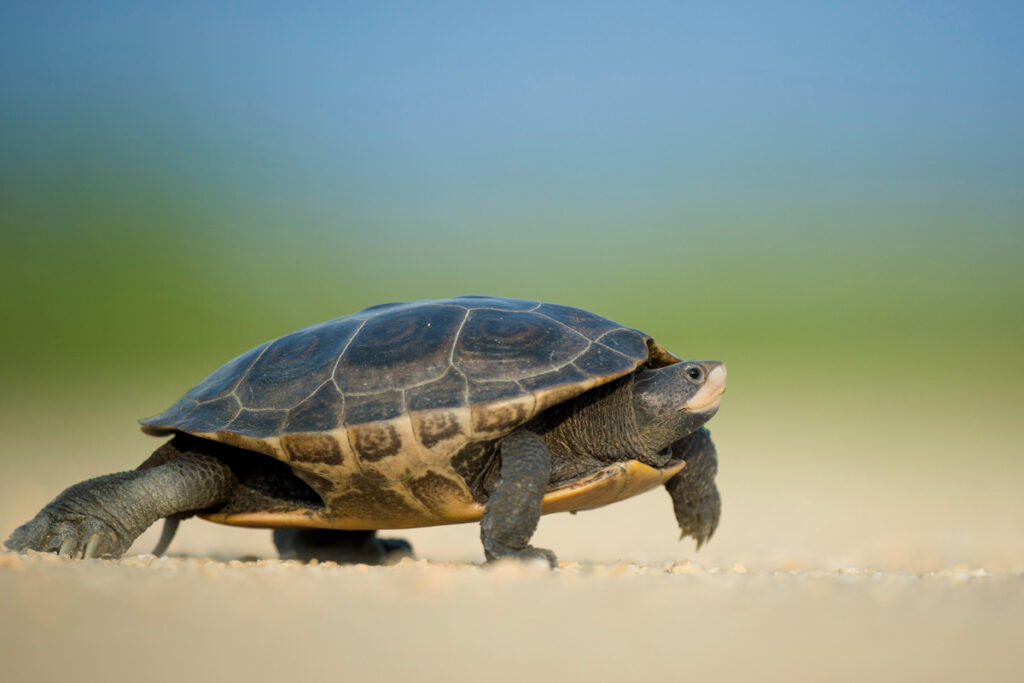
Some freshwater turtles take underwater endurance to an entirely different level, spending the winter months submerged at the bottom of a frozen lake where they can survive without freezing – or breathing – for 100 days or more. Turtles achieve the impossible by slowing down their metabolism during brumation – a reptilian version of hibernation.
These turtles do cheat a little, as they aren’t completely holding their breath. While in brumation, they can absorb some oxygen through blood vessels in their skin. They have particularly vascularized cloacas, or butts, so scientists call this mode of breathing cloacal respiration.
Image Credit: Fengkai Liu/Unsplash.com
Animals That Don’t Breathe
It has long been assumed that all multicellular animals require oxygen to survive. But in 2010, Roberto Danovaro, an Italian marine biologist from the Polytechnic University of Marche, found three new species of Loricifera, microscopic creatures that seemed to be thriving – and even reproducing – in hypersaline, oxygen-free sediment at the bottom of the Mediterranean Sea.
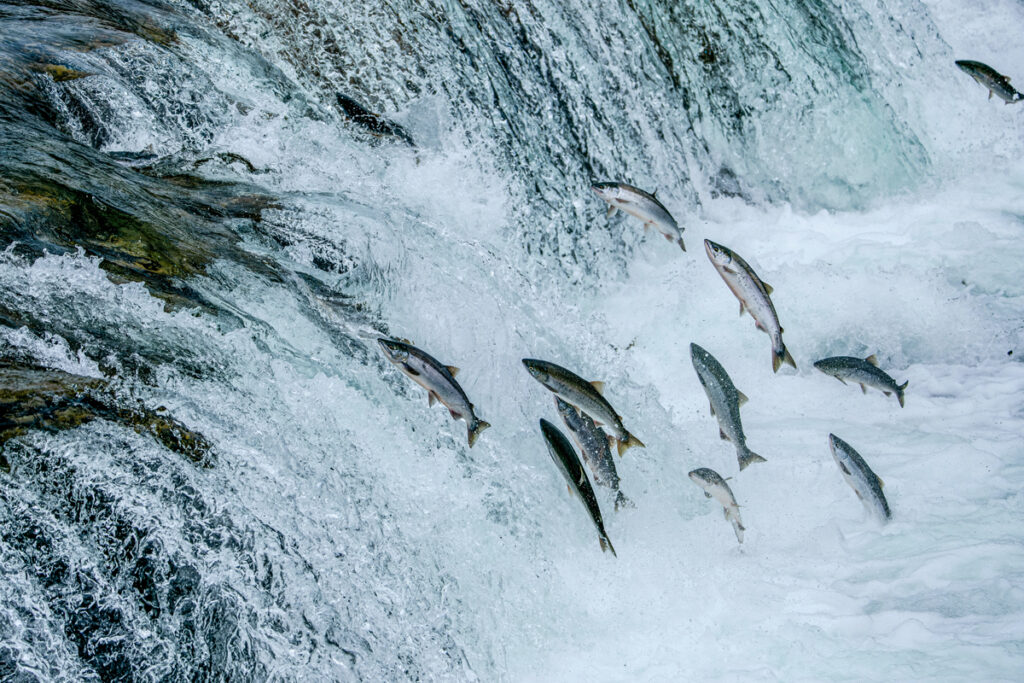
A decade later, microbiologists from Oregon State University announced another example of a multicellular animal that doesn’t require oxygen. Henneguya salminicola, a parasite related to jellyfish and corals, was discovered living in the muscle of salmon – a decidedly anaerobic, or oxygen free, environment. There are likely scores of undiscovered creatures out there that don’t need oxygen to survive.
Advertisement
Your Daily Guide to the Animal Kingdom
Get to know the animals that share our planet with this daily newsletter.
Success! Welcome to Animal Facts.
Check your inbox for your daily email.
Sorry, your email address is not valid. Please try again.