5 Birds With Clever Survival Tricks

Image Credit: Sekar B/Adobe Stock

From the outside, birds can seem remarkably similar: feathers, wings, beaks, and the occasional catchy song. But expand your view across the bird family tree and you’ll find an incredible variety of survival adaptations. Some birds can smell prey hidden underground, others filter food from muddy water, and a few even hatch with claws on their wings. These are five extraordinarily clever examples of evolution’s ingenuity.
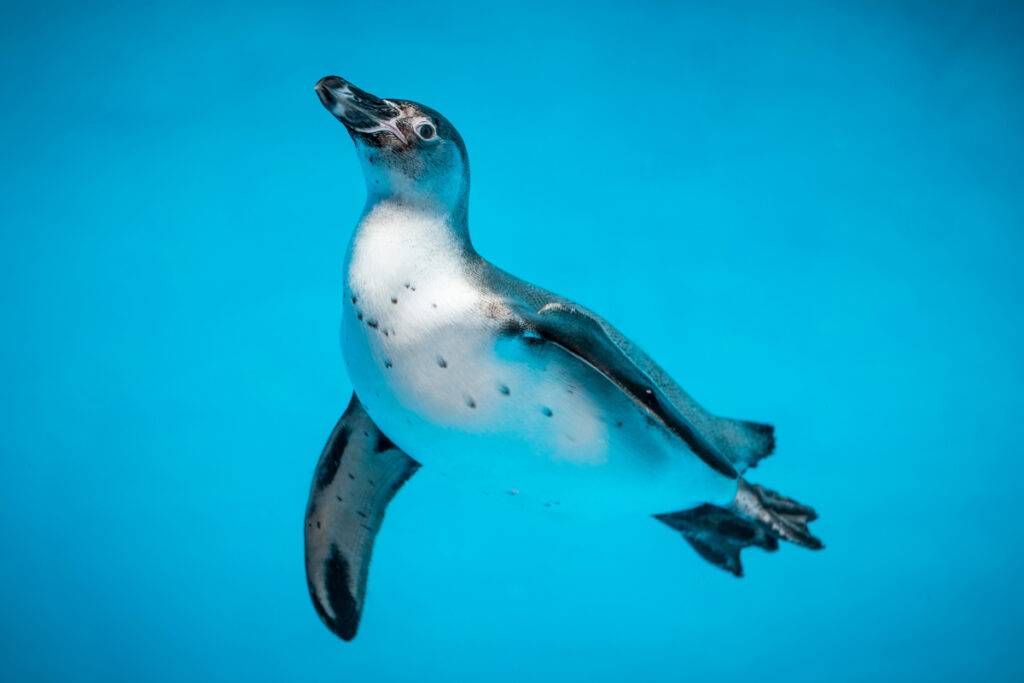
Image Credit: Uriel Soberanes/Unsplash.com

Penguins’ Paddle Wings

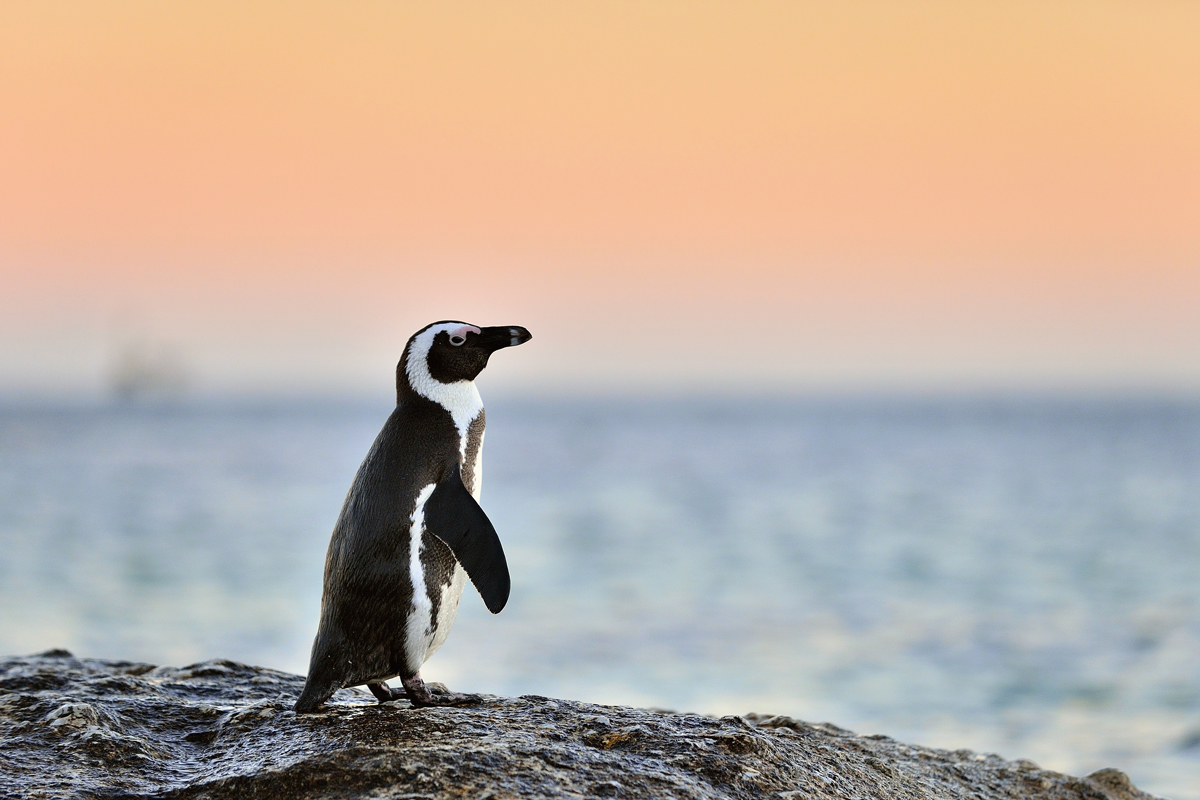
Most birds evolved for the sky, but penguins took a slightly different path. Instead of perfecting flight, they became master swimmers, perfectly adapted for life in the water. Some species spend months at sea, coming ashore only to breed or molt, so nearly every part of a penguin’s body is adapted for swimming and surviving frigid oceans. 

Their feathers are unlike any flighted bird. They have thousands of feathers that are short, dense, and overlap in thick layers to form a waterproof outer coat. Beneath that outer coat, softer down traps a layer of insulating air against the skin, helping keep these birds warm even in near-freezing water. Their wings have also traded flight for function, evolving into stiff, paddle-like flippers that propel penguins through the water with remarkable speed and agility.
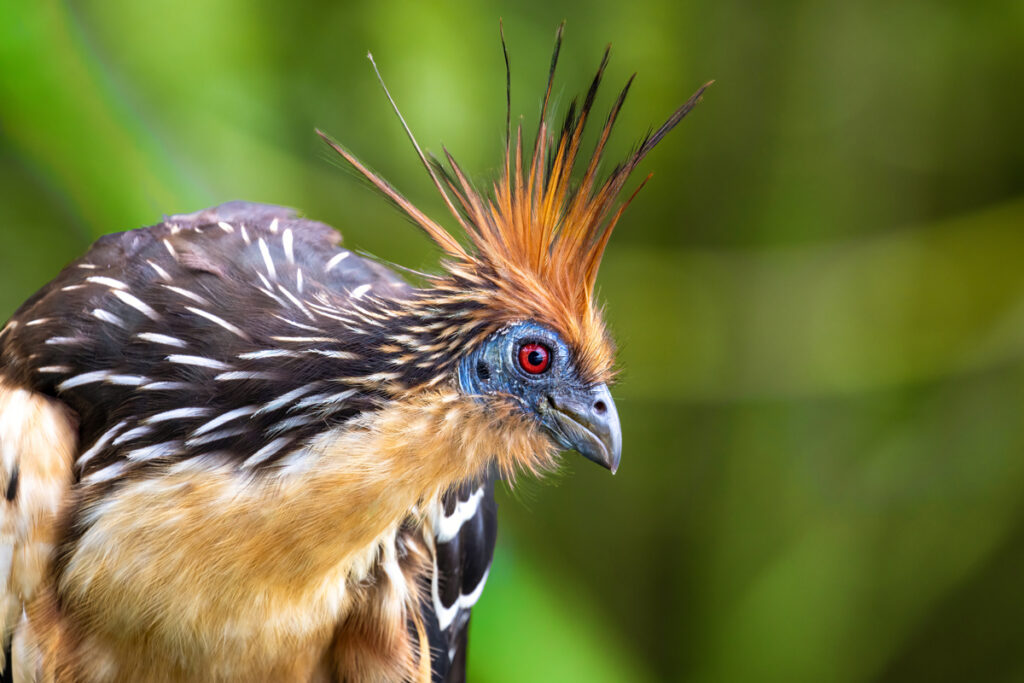
Image Credit: Sekar B/Adobe Stock

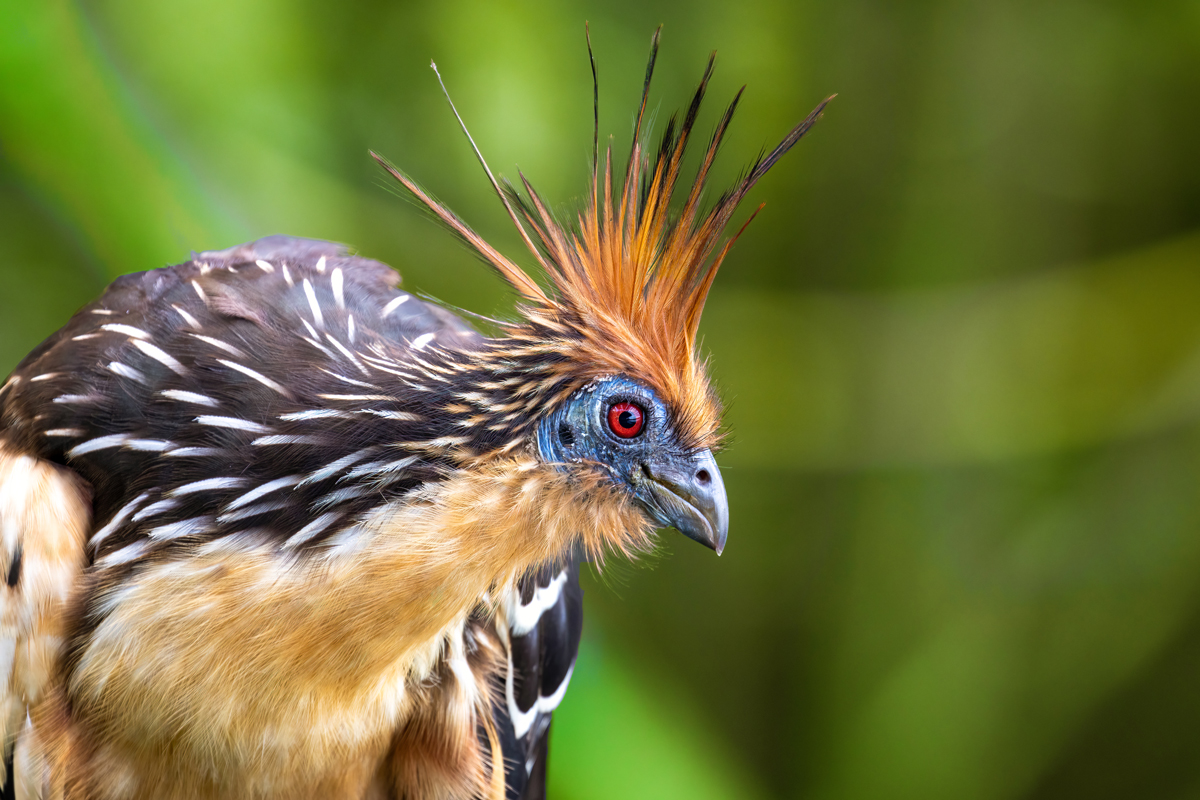
Hoatzins’ Clawed Wings

The hoatzin is an odd bird by almost every measure. Native to the swamps of South America, it has a distinctive odor that has earned it the nickname “stinkbird,” and it’s such a poor flyer that it prefers hopping clumsily through the trees. But its strangest feature belongs to its chicks, which hatch with small claws on the bends of their wings.

Those claws serve a very specific purpose. Hoatzin build their nests over water, and when danger approaches young chicks know to jump into the water below and swim to shore. Once the danger has passed, they use those claws to climb back up tree trunks and return to their nest. As the birds mature and become better fliers, the claws disappear. This is such a unique adaptation in the bird world, and has been traced back to the clawed wings of ancient avian dinosaurs. 
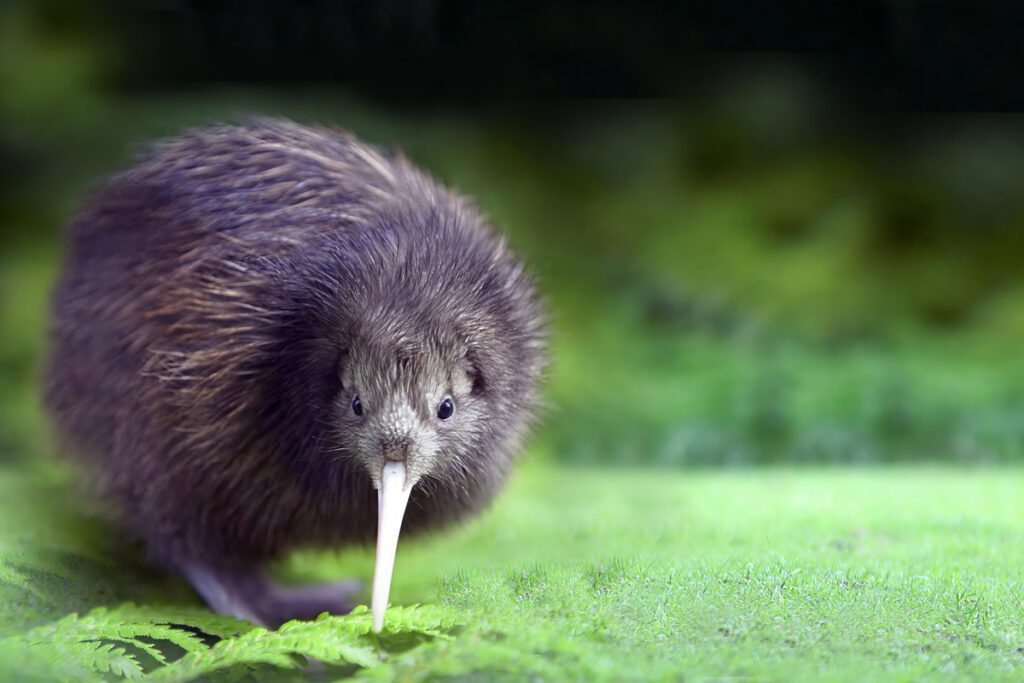
Image Credit: mastak80/Adobe Stock

Kiwis’ Nostrils

Unlike other nocturnal birds like owls, kiwis have surprisingly poor eyesight. Instead, it relies on its sense of smell, which is far above that of other bird species. The olfactory section of their brain is enormous, and their external nostrils are located just above their long beaks, allowing them to sniff out worms and insects hidden in the dirt. 

Smell isn’t its only trick. The tip of a kiwi’s beak is packed with sensory receptors that detect tiny vibrations in the soil, helping it pinpoint prey even in complete darkness. But these impressive senses come with a drawback: the kiwi can often be heard snuffling through the leaf litter, alerting others to its presence. Still, its remarkable nose and beak help it to navigate a world where most birds would be at a disadvantage.
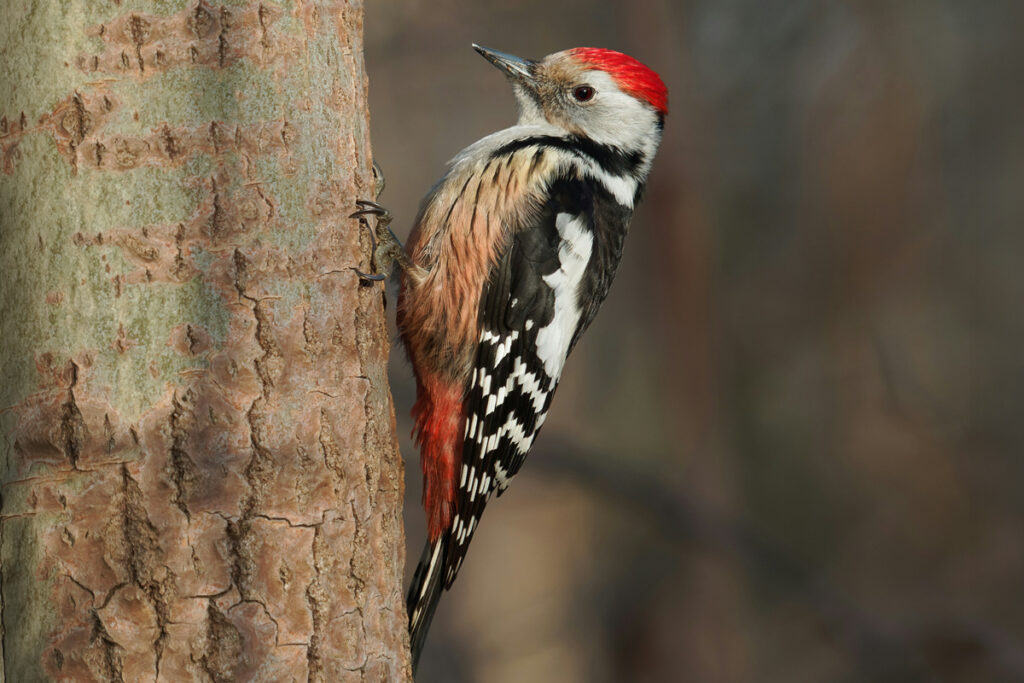
Image Credit: Łukasz Rawa/Unsplash.com

Woodpeckers’ Tongues

The sound of a woodpecker hitting a tree trunk or telephone pole is unmistakable. But how do these small birds withstand the force of banging without inflicting damage on themselves? The answer lies in several unique adaptations, including their impressive tongues. 

Woodpeckers have extra long tongues tucked inside their beaks, but unlike other birds, those tongues are supported by an elongated set of bones called the hyoid apparatus, which help the tongue extend far beyond the beak and wrap around the back of the skull when retracted. This allows woodpeckers to reach deep into trees to snag insects and gives the woodpecker’s brain added protection during their pecking. Coupled with special skull bones, these woodpeckers can peck to their hearts’ content without damaging themselves.
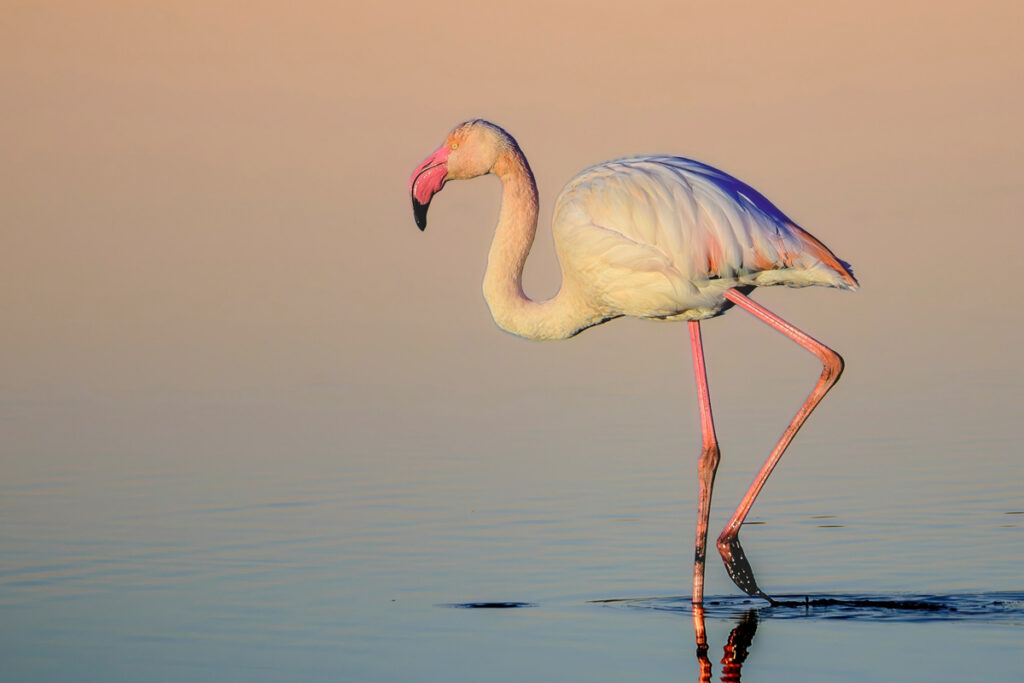
Image Credit: Philippe BONTEMPS/Unsplash.com

Flamingos’ Upside-Down Beaks

Bright pink feathers and a proclivity to standing on one foot might be the most famous features of a flamingo, but they are far from the most remarkable. Look closely and you might notice that the flamingo’s beak is curved upside down. They open their beaks using the top portion, instead of the lower jaw. 

Using their limber necks, flamingos tilt their heads upside down and submerge in water to eat. As the bird lowers its head into shallow water, it sweeps its curved bill from side to side, scooping up water, mud, and tiny aquatic creatures. Their beaks feature an impressive filtration system that pumps water and mud back out, while keeping algae, shrimp, and other prey trapped. This built-in filtration system allows flamingos to thrive on food sources that many other birds simply can’t access.

How Are Bear Species Different?

Image Credit: Hans-Jurgen Mager/Unsplash.com

There are eight species of bears on Earth, and no two move through the world the same way. One survives almost entirely on bamboo. Another hunts seals across an icy tundra. A third is missing a set of upper front teeth, turning its mouth into something remarkably close to a furry Shop-Vac for termites. The word “bear” covers everything from a 150-pound tree climber in the jungles of Borneo to a 1,600-pound hunter roaming Arctic sea ice that hasn’t seen a tree in its life. (Though one thing it doesn’t cover are koala bears, which are misnamed marsupials.) Same family tree, eight wildly different ways of surviving.

Image Credit: Antonioguillem/Adobe Stock

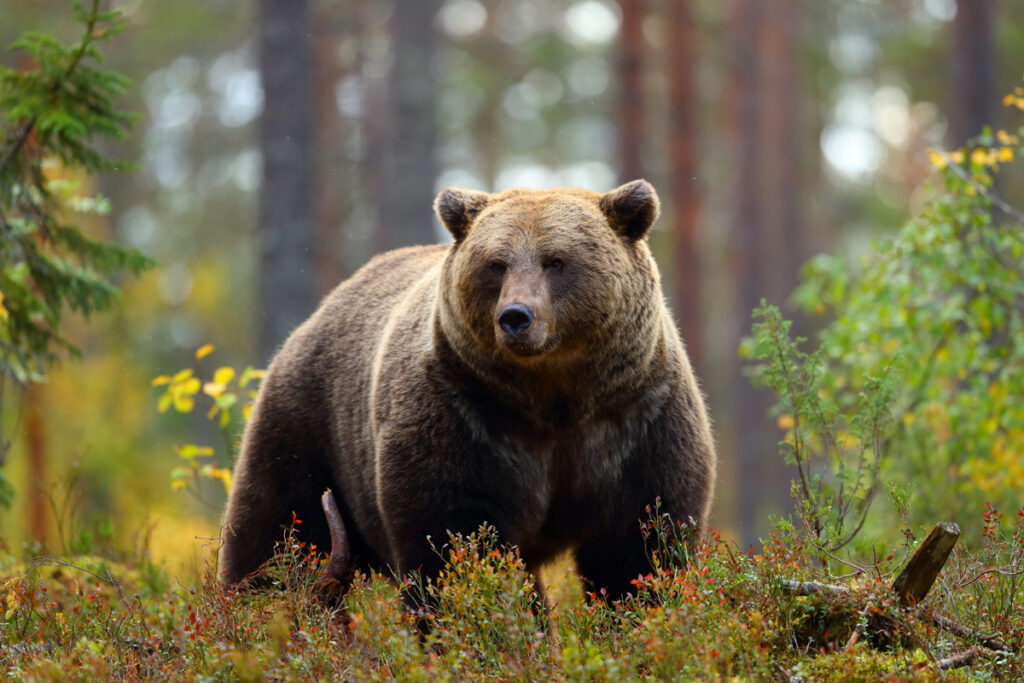
Brown Bear

If there’s something edible nearby, a brown bear will probably eat it. Roots, berries, salmon, elk — it isn’t picky. That flexibility has helped the species spread across North America, Europe, and Asia, with especially large populations in Russia and Alaska. Brown bears are also the only species with a distinctive muscular hump over their shoulders. It powers the massive digging muscles they use to tear into soil in search of roots, rodents, and dens. Size varies by subspecies, but large males can top 1,200 pounds. The Kodiak bear — an Alaskan subspecies fueled by a steady diet of salmon — is among the largest bears alive.

Image Credit: rima15/Adobe Stock 

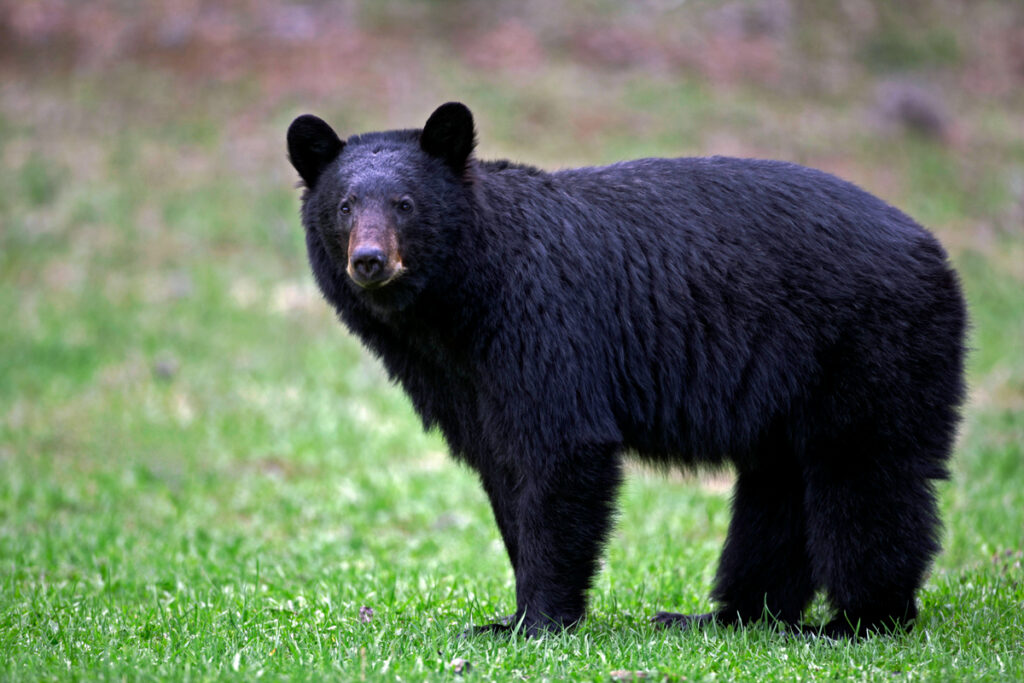
American Black Bear

If you’ve ever heard stories about a bear raiding a campsite, there’s a good chance it was an American black bear. They’re the most common bears in North America and among the least picky eaters, rounding out a mostly plant-based diet with insects, fish, and whatever scraps they come across. Despite the name, their coats aren’t always black. Depending on where they live, they may be brown, cinnamon, or, along parts of coastal British Columbia, an almost ghost white. They tend to be slightly smaller than brown bears, with shorter claws that are curved and perfect for climbing trees. If you’re ever confused between the two, look for the ears: brown bears have smaller, curved ears while black bears sport taller, pointier ears.
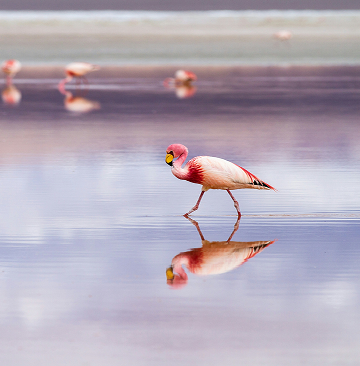
Image Credit: vaclav/Adobe Stock

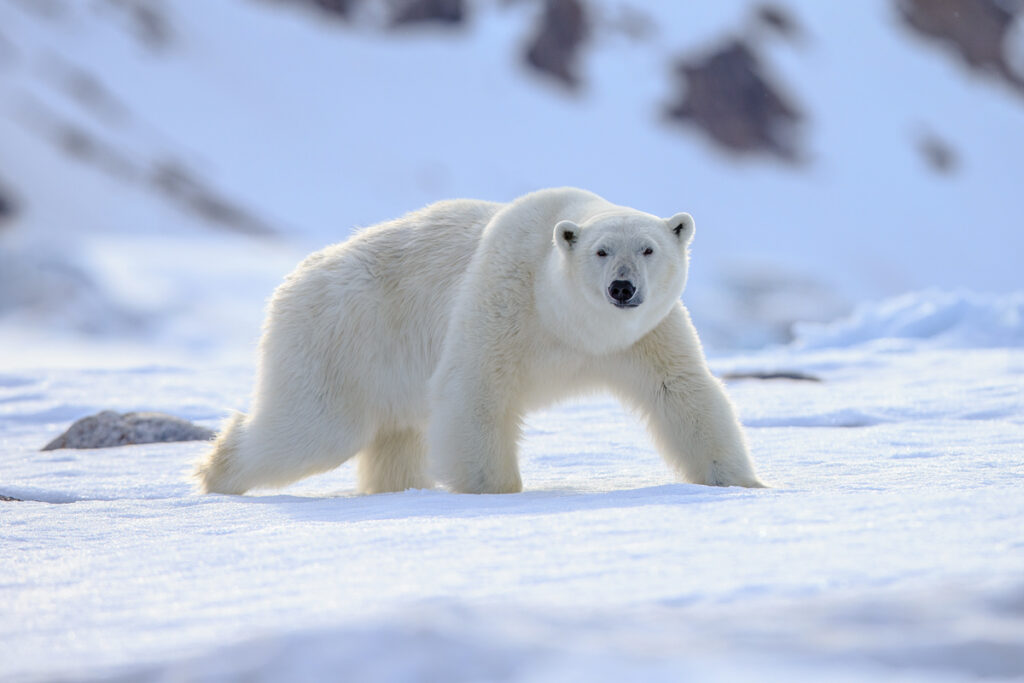
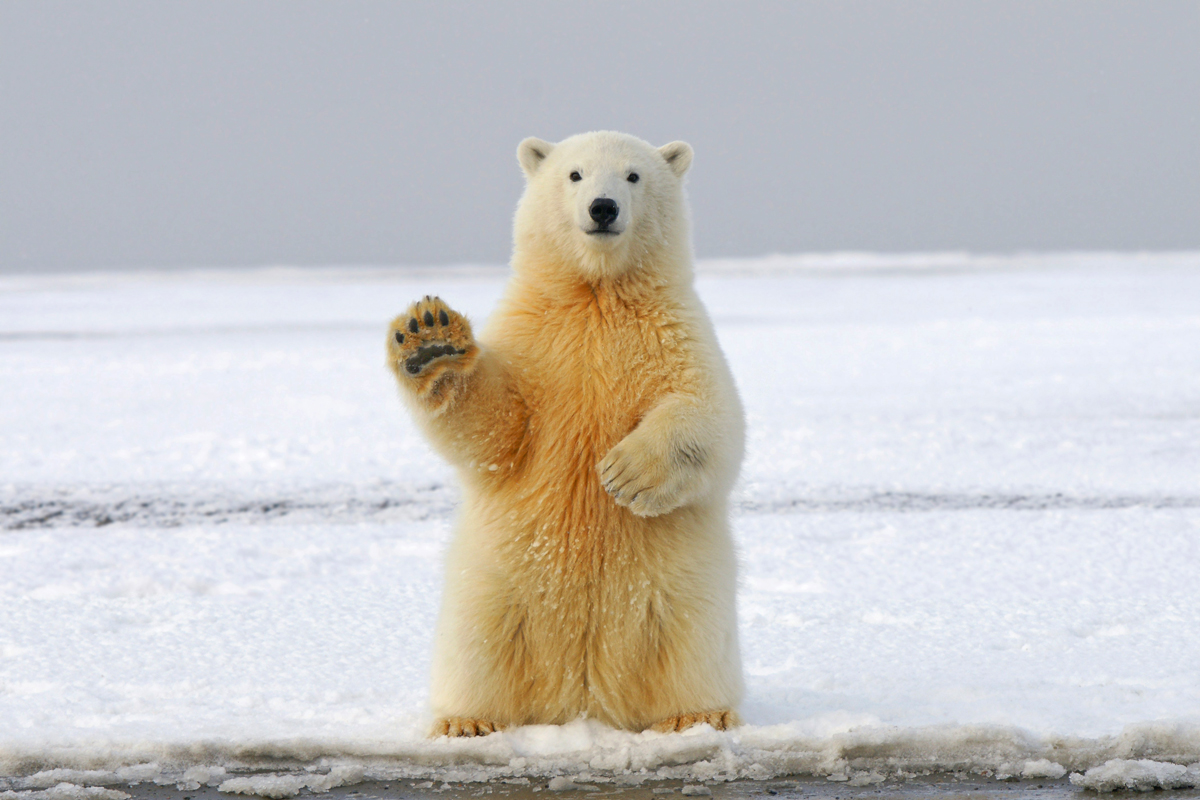
Polar Bear

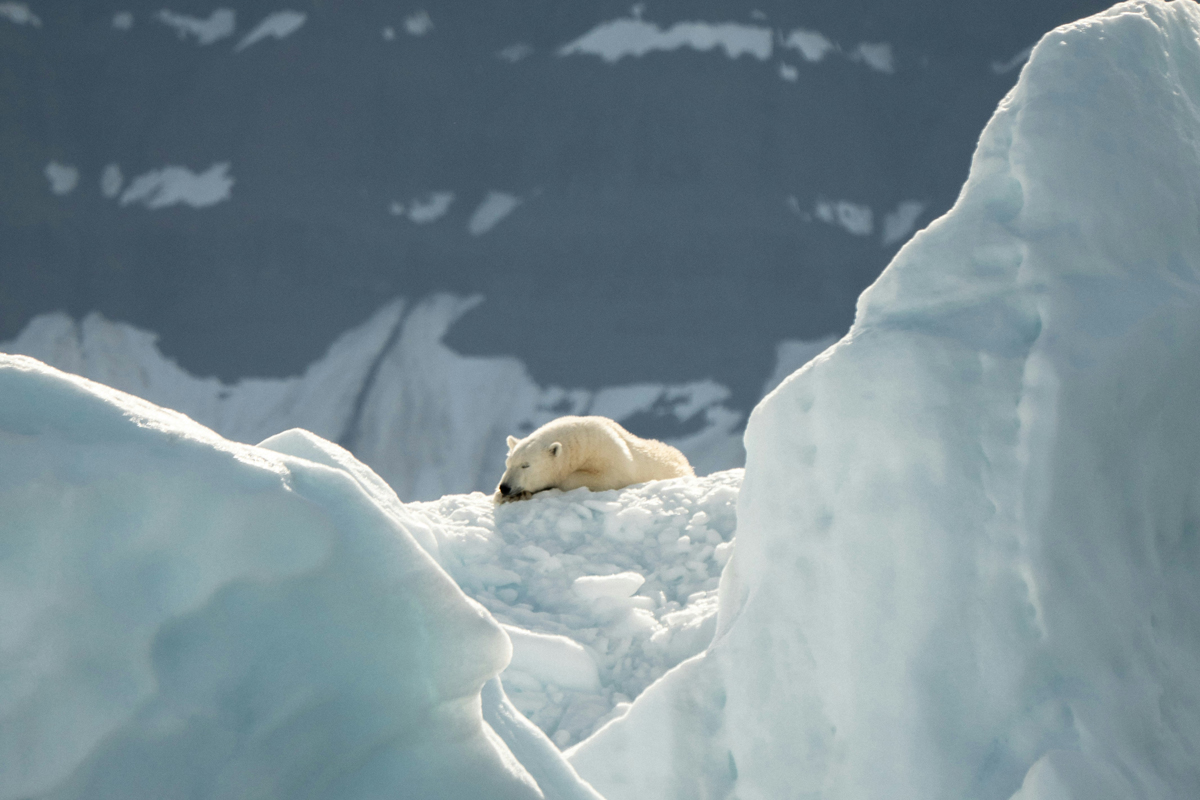
The polar bear spends so much of its life on sea ice that it’s considered a marine mammal under U.S. conservation law. It’s also the only bear that’s almost entirely carnivorous, living primarily on seals and their calorie-rich fat to help it survive the Arctic cold. That rich diet allows males to reach nearly 1,600 pounds, making them the largest bears on Earth. Their fur, meanwhile, isn’t actually white. Each hair is clear and hollow, scattering light in much the same way snow does, allowing them to blend in with their barren surroundings. Under that fur is a thick layer of black skin, that helps trap sunlight to keep them warm. Polar bears also sport enormous, webbed paws to help them swim.

Image Credit: byrdyak/Adobe Stock 

Asiatic Black Bear

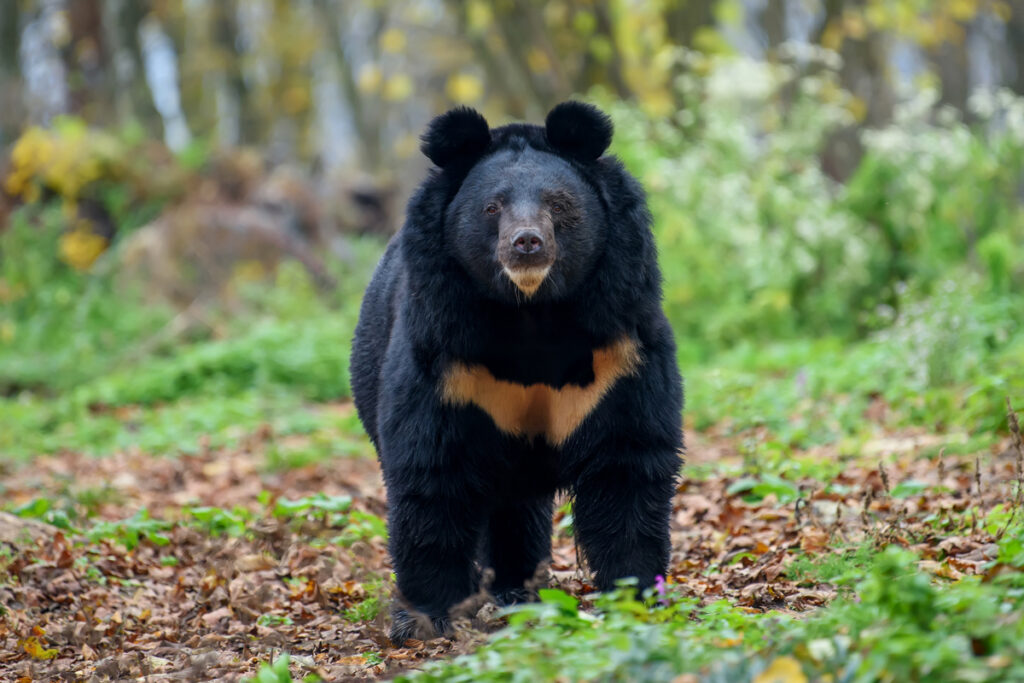
The pale crescent across its chest earned the Asiatic black bear the nickname “moon bear.” It spends much of its time in the forested mountains of eastern Asia and eats somewhat more meat than its American cousin, though fruit, vegetation, insects, and honey still appear in its diet. Whether it hibernates depends largely on where it lives. Bears in the colder northern parts of their range den up each winter, while those farther south simply keep going because food never becomes scarce enough to justify months of sleep.

Image Credit: Gnagel/Adobe Stock

Sloth Bear

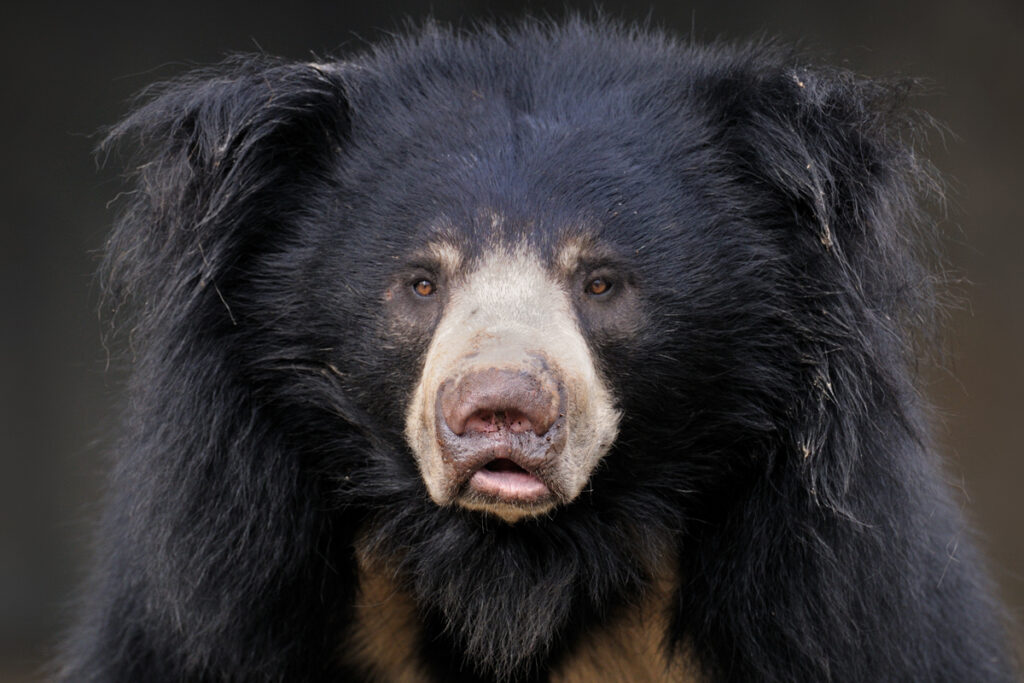
Most bears are opportunists, but sloth bears are specialists. They’re missing a set of upper front teeth, leaving a gap that lets them vacuum up ants and termites after ripping open mounds with their long, curved claws. The resulting slurping can be heard from as far as 330 feet away. Because their forests and grasslands across the Indian subcontinent stay warm year-round, sloth bears skip hibernation altogether. And despite the implication of their “sloth” name, they’re anything but lazy. In fact, these bears are known for standing their ground against tigers rather than retreating.

Image Credit: imphilip/Adobe Stock

Sun Bear

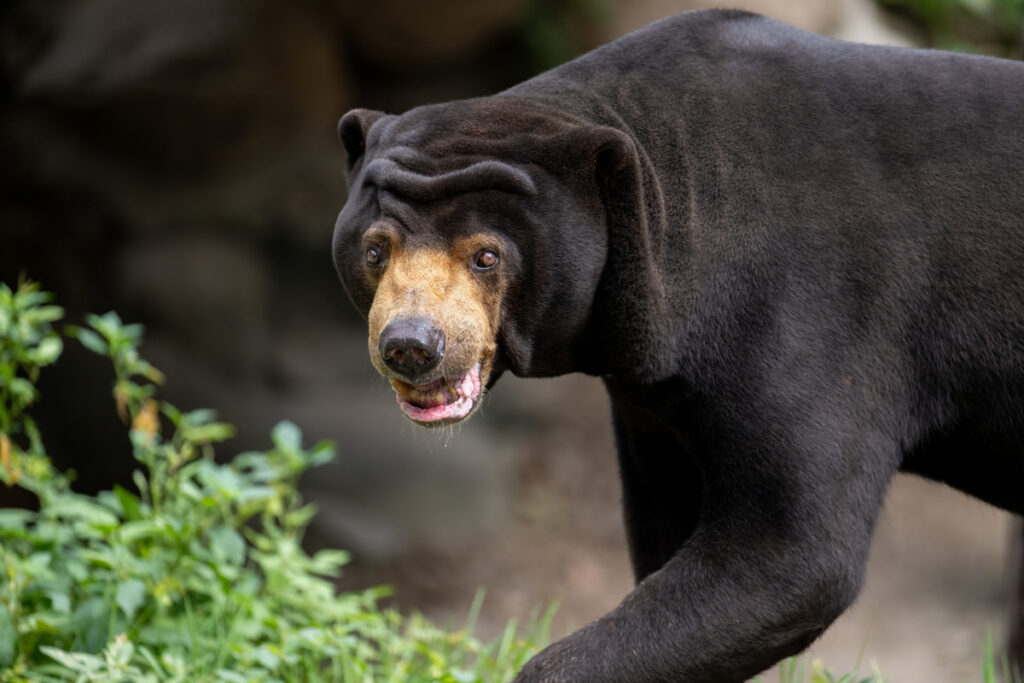
At roughly 150 pounds, the sun bear is the smallest member of the bear family. Its compact size makes climbing through the dense tropical forests of Southeast Asia much easier, allowing it to reach fruit, honey, and insect nests high above the ground. Every sun bear also wears a pale patch across its chest that’s unique to the individual, almost like a fingerprint. Fruit makes up much of its diet, with insects, honey, and occasional small animals rounding out the menu.

Image Credit: DS light photography/Adobe Stock

Giant Panda

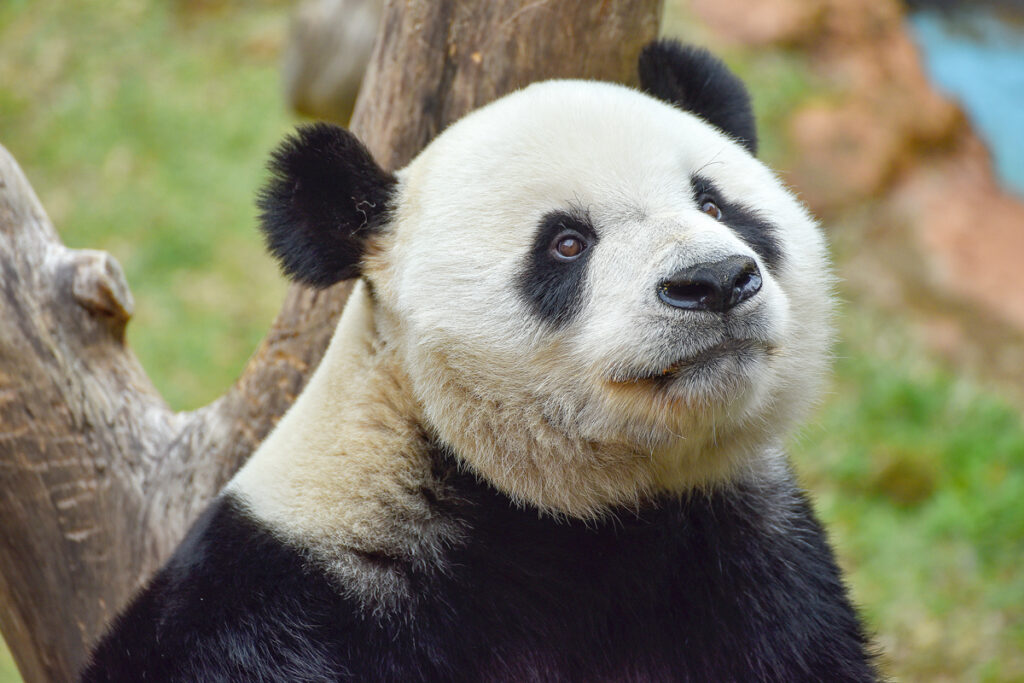
The giant panda is proof that evolution doesn’t always prioritize efficiency. These black-and-white furballs still have the digestive system of a carnivore but survive almost entirely on bamboo, forcing them to spend most of their waking hours eating just to extract enough nutrients. Giant pandas survive in only six mountain ranges in western China. Their cubs are even more remarkable: born pink, nearly hairless, and weighing about 1/900th as much as their mothers, they have one of the largest size differences between mother and newborn of any mammal.

Image Credit: Ralph Lear/Adobe Stock

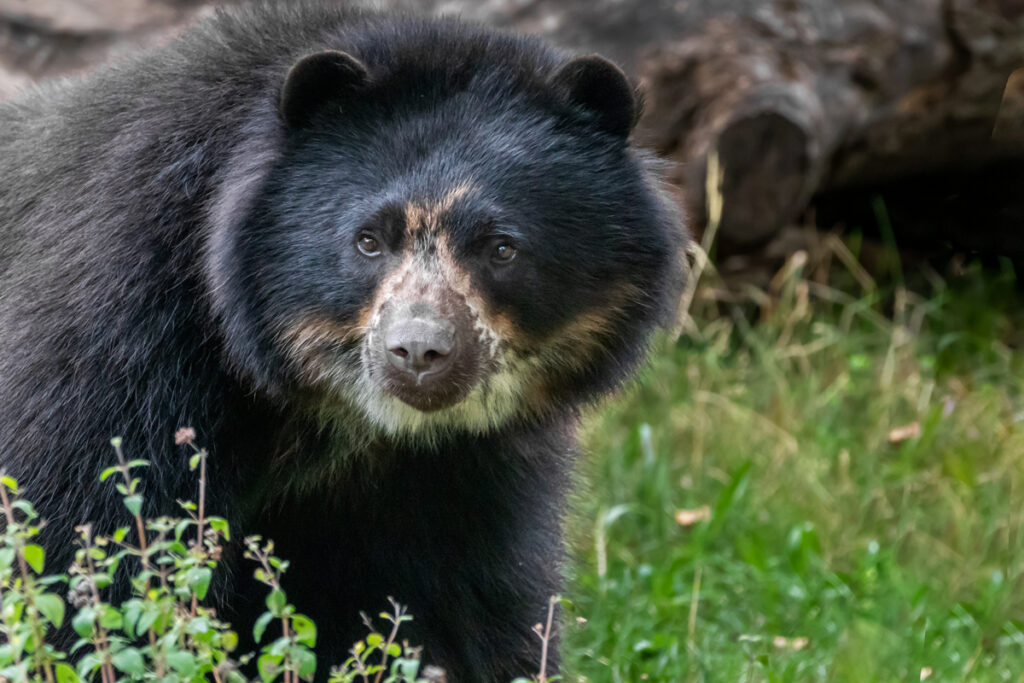
Andean Bear

The Andean bear is South America’s only native bear species. Pale rings around its eyes give it the nickname “spectacled bear,” though the markings vary enough that no two individuals look exactly alike. Despite being one of the continent’s largest land carnivores, it gets most of its calories from fruit and other plants, with meat making up only a small part of its diet. It’s also an excellent climber, spending plenty of time high in the cloud forest canopy.

5 Friendly Snakes Hanging Out In Your Neighborhood

Image Credit: David A Litman/Adobe Stock

Most people’s first reaction to a snake in the yard is to back away slowly and reconsider ever stepping foot outside again. Fair enough. But the overwhelming majority of snakes you’re likely to run into in a backyard, garage, or hiking trail are not just harmless — they’re earning their keep. The very animals most homeowners want gone — rodents, grubs, slugs, even the occasional venomous snake — are exactly what these backyard snakes are there to eat. Here are a few of the snakes worth recognizing, starting with the one you’ve probably seen before.

Image Credit: Erik/Adobe Stock

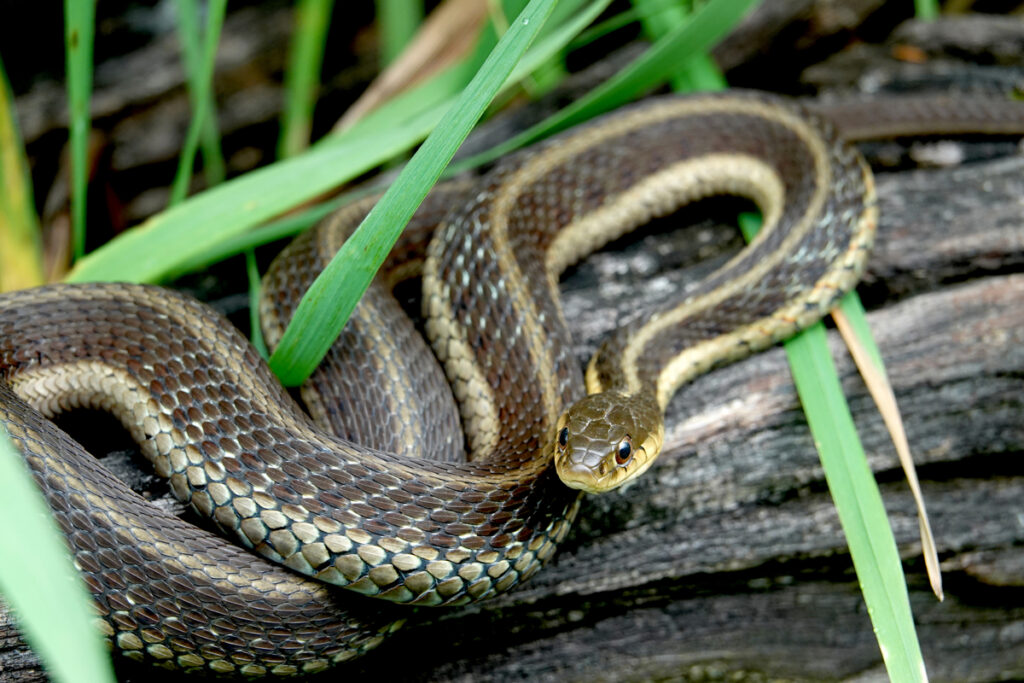
The One You’ve Probably Already Met

If a snake has ever startled you near a garden hose, it was likely a garter snake. It’s the most widely distributed snake in North America, turning up in yards, marshes, and vacant lots with equal enthusiasm. Garter snakes skip eggs entirely and give birth to live young, sometimes more than 40 at once. Their saliva also carries a mild toxin, just potent enough to subdue a slug or salamander, according to the National Park Service. For a human, the worst-case outcome of a bite is some minor swelling, which makes the flattened body, the musky smell, and the frantic wriggling seem far scarier than it really is. If you spot one in the yard, the best thing to do is leave it alone. It’ll usually move along on its own after helping itself to slugs, insects, and other garden pests. 

Image Credit: David A Litman/Adobe Stock

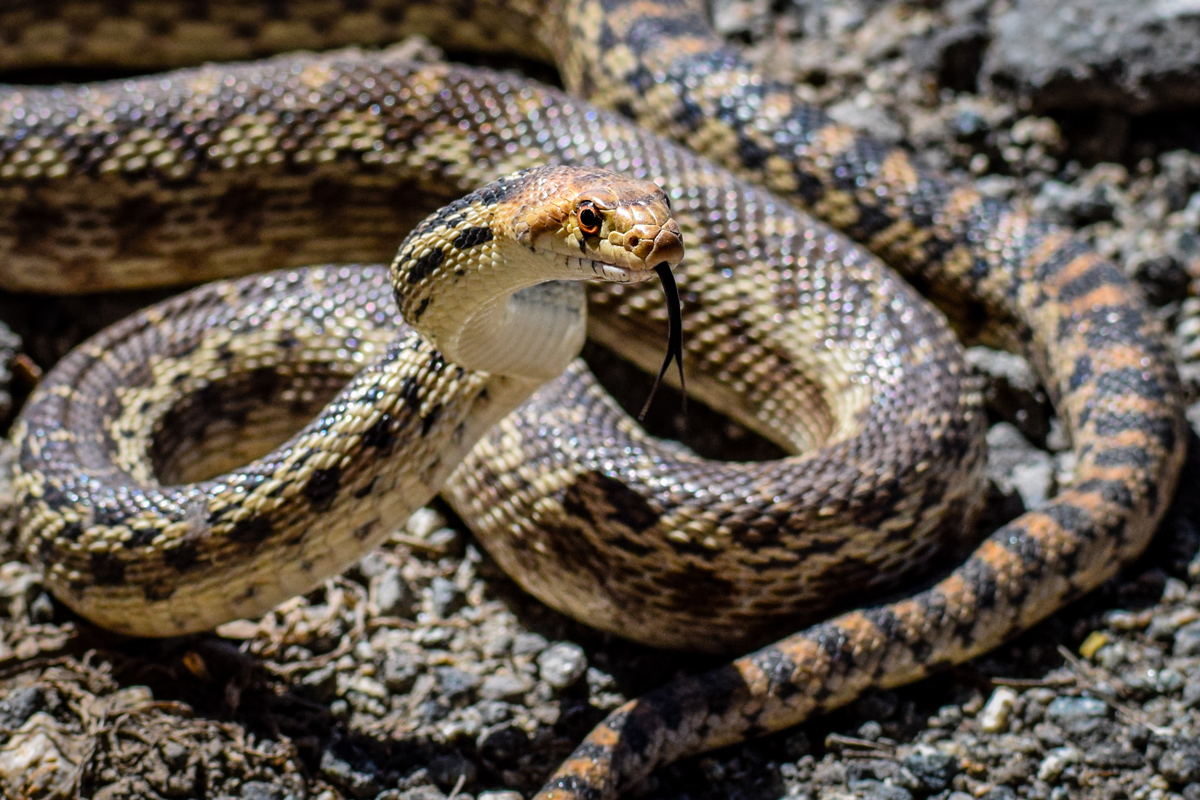
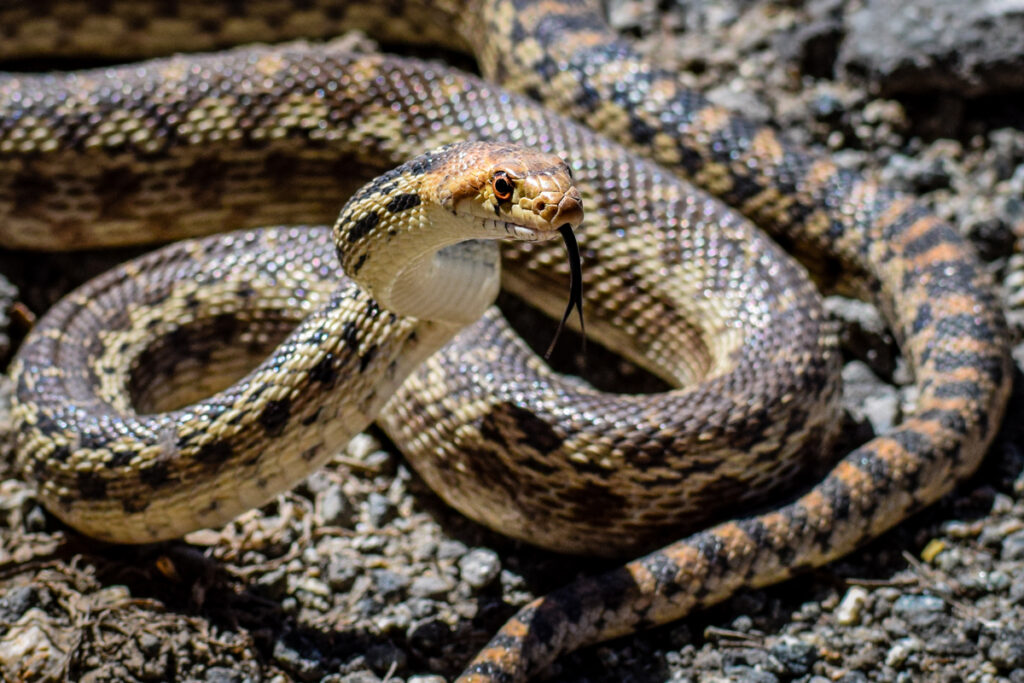
The Impersonator

The gopher snake, sometimes called a bullsnake depending on the region, has made an entire career out of pretending to be something scarier. When cornered, it flattens its head into a triangle, hisses louder than its body size should allow, and vibrates its tail against dry leaves to fake a rattle. Herpetologists call this Batesian mimicry — a harmless species borrowing the reputation of a dangerous one, in this case a rattlesnake — and it works almost too well. Gopher snakes are frequently killed after being mistaken for rattlesnakes, even though they spend their lives keeping rodent populations in check around farms, barns, and backyards. If you come across one, give it some space instead of assuming it’s dangerous. You likely have a free rodent-control expert passing through your yard.

Image Credit: Cavan/Adobe Stock

The One That Eats the Scary Ones

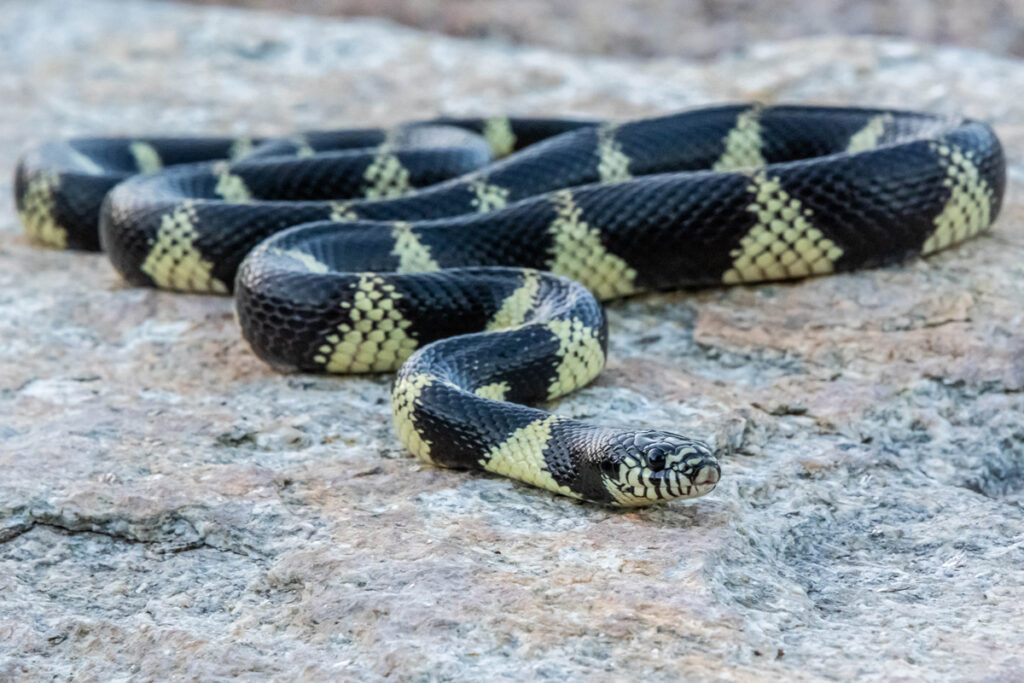
California kingsnakes have made a habit of eating things that would kill most other animals. They’re naturally resistant to rattlesnake venom, allowing them to hunt one of North America’s most feared snakes with little risk. Instead of relying on venom themselves, they kill by constriction. Rodents, lizards, and other snakes round out their diets, making them a handy neighbor to have around. Their distinctive black, brown, and cream banding has made them popular pets, but wild kingsnakes are just as content patrolling a woodpile as living in a terrarium.

Seeing one around your property can actually be reassuring, since it’s one of the few snakes that helps keep rattlesnake populations in check.

Image Credit: Mark Kostich/Adobe Stock

The Barn Regular

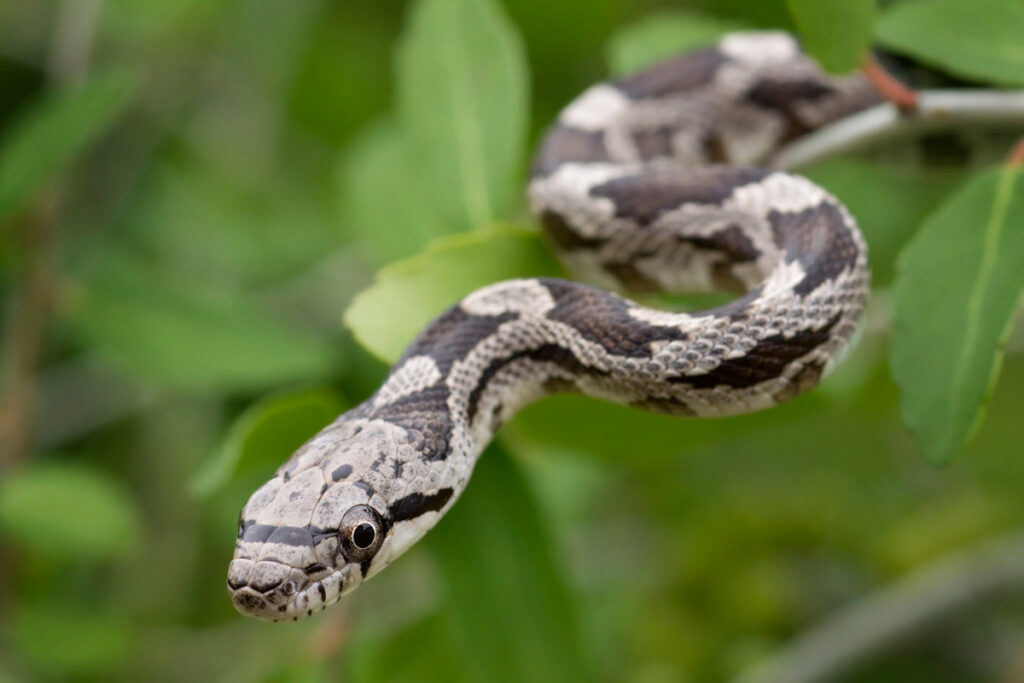
Rat snakes, corn snakes among them, are the reason a lot of old barns don’t have a rodent problem. They’re some of the best climbers in the snake world, capable of scaling brick, bark, or fence posts to reach a bird’s nest or a gap in the rafters. Corn snakes got their name because early farmers often found them around grain stores and assumed they were after the corn, when they were really following the mice. Docile even by snake standards, rat snakes rarely bite, which is part of why they’ve become one of the most popular reptiles in the pet trade. At this point, “rat snake” is basically a job title.

Around homes, barns, or sheds, they do exactly what you want a neighbor to do: remove the rodents before they become a bigger problem.

Image Credit: Mike Wilhelm/Adobe Stock

The One Hiding Under Everything

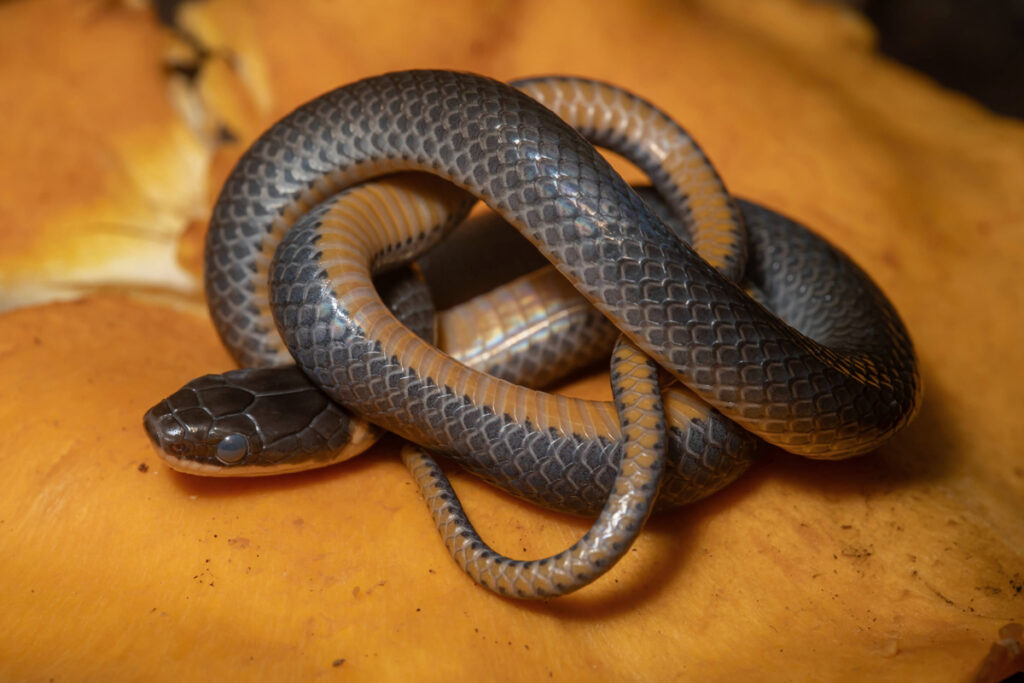
Ring-necked snakes rarely grow past 15 inches, and most people never see one, since they spend the bulk of their lives underground or tucked beneath rocks and logs. If it ever does get flipped over during yard work, it puts on a dramatic display: the tail coils into a tight corkscrew, exposing a belly that can run bright yellow, orange, or red, a flash of color meant to startle whatever uncovered it. It’s a bluff, not a bite. The snake itself feeds mostly on earthworms and salamanders, and it’s rarely aggressive toward anything larger than that.

If you uncover one while gardening or moving logs, simply place the cover back when you’re finished. It’ll usually disappear underground without any interest in sticking around.

None of these animals show up looking for a fight. They show up looking for the same rodents and pests that most homeowners would rather not deal with themselves. If you see one, the easiest solution is usually to give it a little space and let it continue on its way. Once you know who’s who, they’re a lot easier to appreciate.

Penguins Have Knees — You Just Can’t See Them

Image Credit: Uryadnikov Sergey/Adobe Stock

Penguins have one of the oddest body shapes of any creature in the wild. Short, stocky, and flightless, these aquatic birds spend most of their time either swimming or waddling across ice and rocks. At first glance, penguins look like they have tiny legs — or feet that simply sprout from their torso. But appearances can be deceiving. Beneath a penguin’s thick feathers and layer of fat are surprisingly long legs, complete with a femur, kneecap, fibula, and a fully functional knee joint. Most of the upper leg is simply tucked inside the body, hidden from view.

By keeping much of their legs close to their bodies, penguins maintain the streamlined profile that makes them such agile swimmers. On land, that same body plan produces their famous waddle. Many penguin species face predators at sea, including leopard seals and orcas, and as such they’re built first and foremost for life in the ocean.

Adult Polar Bears Have No Natural Predators

Image Credit: Annie Spratt/Unsplash.com

It pays to be the biggest creature around, and at 10 feet tall on their hind legs and weighing up to 1,300 pounds, polar bears are king. As the world’s largest land carnivores, they have no natural predators, instead spending their days as the toughest hunters around, stalking seals across sea ice and diving into frigid waters in search of their next meal.

That doesn’t mean polar bears are invincible. Cubs are occasionally vulnerable to wolves or even other polar bears, but healthy adults have little to fear from other wildlife. Their greatest threat today isn’t another predator at all — it’s the rapid loss of Arctic sea ice. As the ice disappears, polar bears lose the hunting grounds they depend on, making it harder to catch enough seals to survive.

Some Snakes Can “Fly” Short Distances

Image Credit: Akash/Adobe Stock

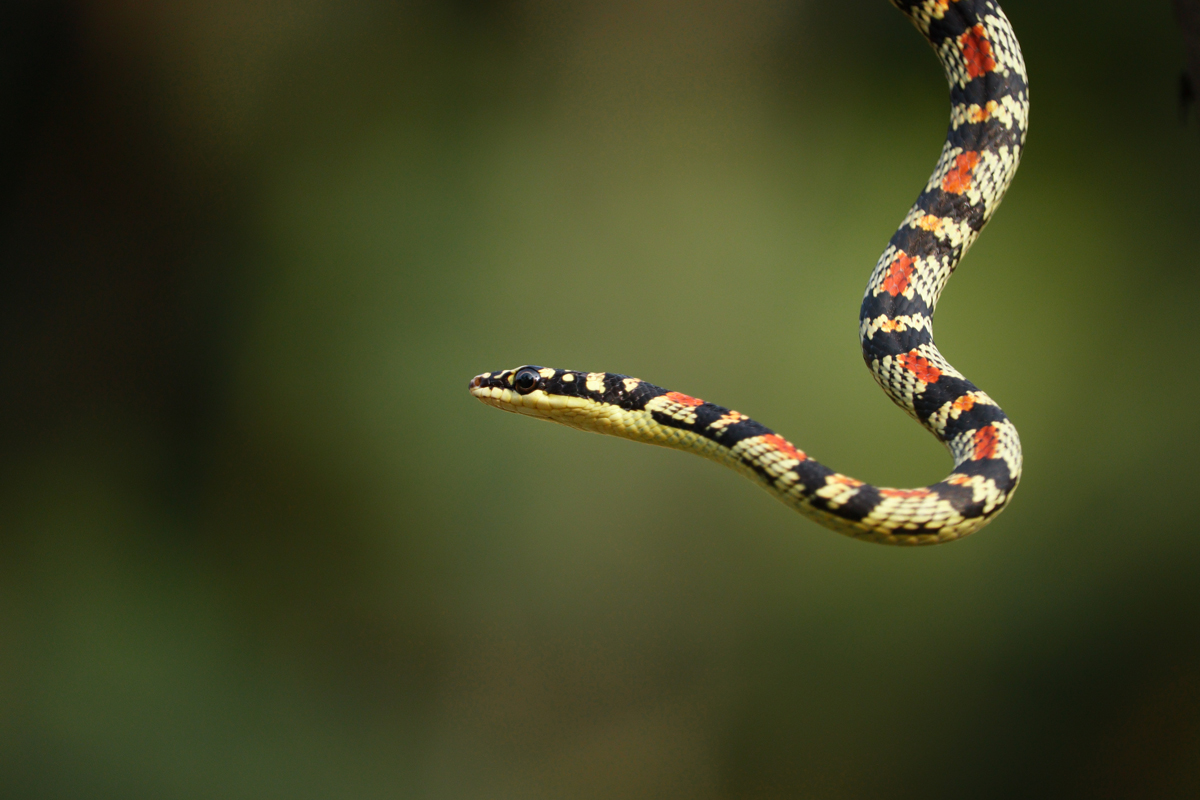
Not in the same way as a bird or bat, but if you spotted one soaring overhead, you probably wouldn’t care about the distinction. “Flying snakes” are actually five species of tree-dwelling snakes that have evolved an extraordinary way to travel through the rainforest. Instead of slithering down one tree and back up another, they launch themselves from the canopy and glide through the air. 

While in flight, they contort their bodies to semi-control their direction, and glide more than 300 feet. Like other snakes, these reptiles are carnivorous, living off small rodents and lizards, and mildly venomous, though mostly harmless to humans. Still, the next time you’re trekking through the jungles of Indonesia, make sure you take the time to look up.

Why Predators and Prey Have Different Eyes

Image Credit: Ivan Sabayuki/Unsplash.com

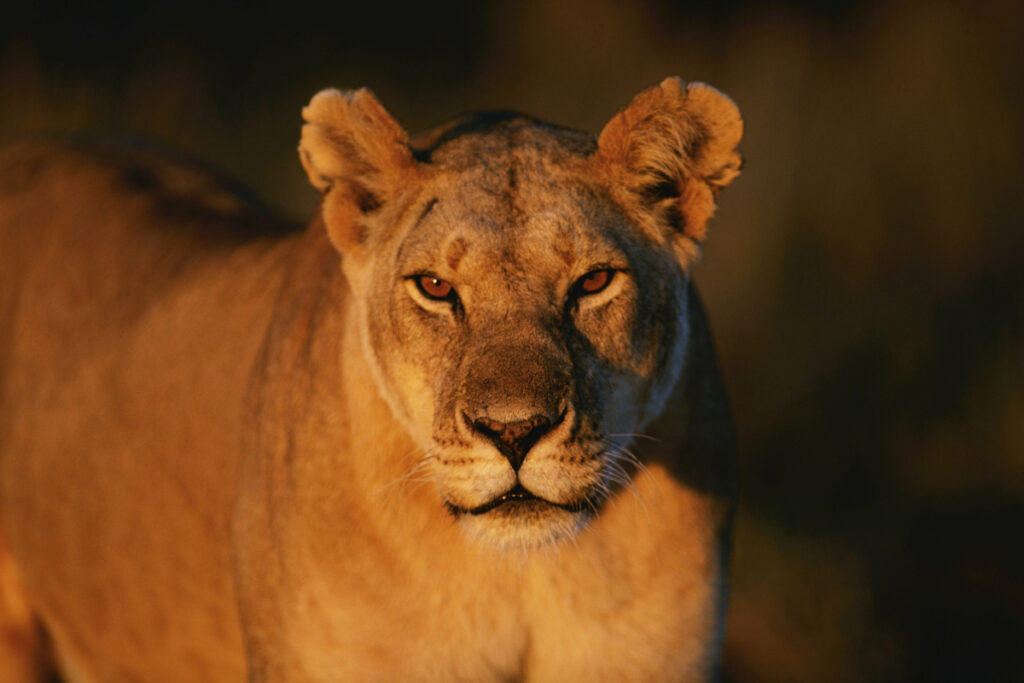
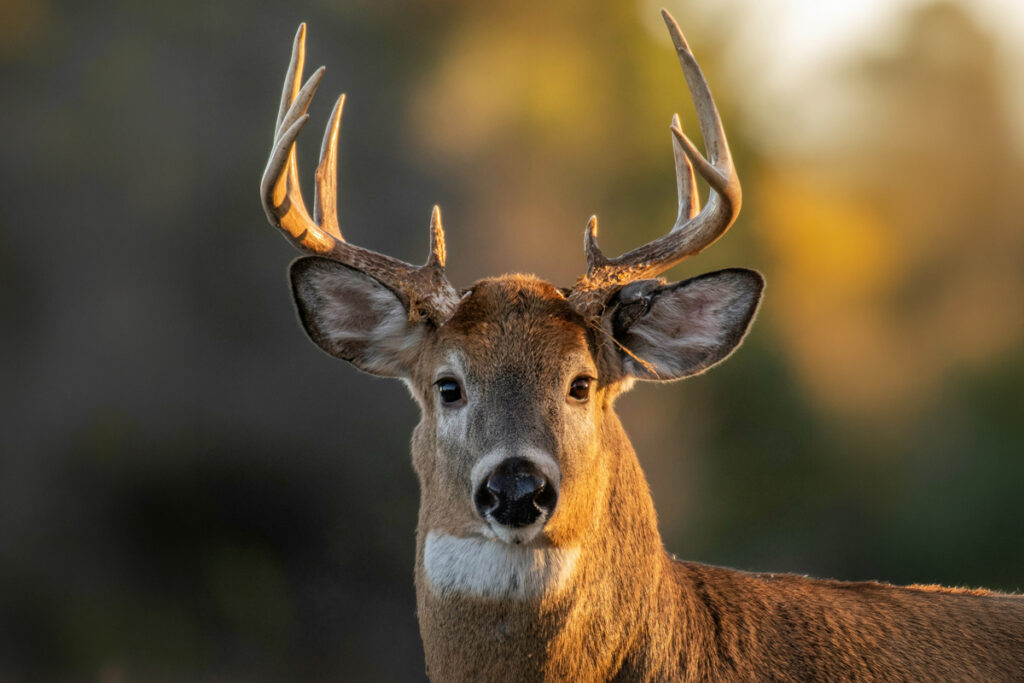
An animal’s eyes can reveal a lot about how it survives. The differences between predators and prey are far from accidental: Over millions of years, each has evolved eyes designed around the very different challenges from finding something to eat to avoiding becoming something to eat. How do predators and prey’s eyes help them do this, and can we easily tell the difference just by looking?

Image Credit: Sergey Antonov/Unsplash.com

Seeing For Survival

The differences between predator and prey eyes are the result of more than 500 million years of evolution, beginning with a major diversification of species during the Cambrian Explosion. As early predators evolved better ways to find and capture prey, the hunted animals faced pressure to detect danger sooner and escape more effectively. 

Fossils from this period reveal just how important vision had already become — and how quickly it evolved. One of the Cambrian period’s largest known predators, the large shrimp-like Anomalocaris, had eyes made up of thousands of individual lenses sticking out of the side of its head, giving it a well-rounded view of its surroundings. This era set the stage for the variety of eyes found throughout the animal kingdom today.

Image Credit: Getty Images/Unsplash.com

Predators Focus on What’s In Front

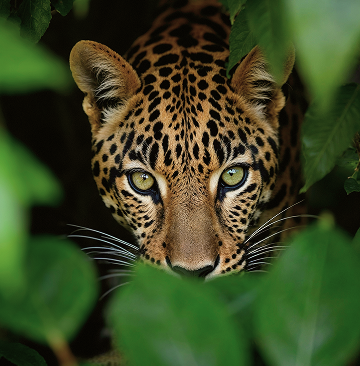
Today, many predators have evolved to have forward-facing eyes. With both eyes focused on the same target, their fields of vision overlap, creating what’s known as binocular vision. The brain combines these two slightly different views into a single three-dimensional image, allowing predators to accurately judge depth and distance.

But rather than evolving once for a single reason, scientists believe forward-facing eyes were favored in different animal groups whenever they served as a survival tool. In mammals such as cats and wolves, for example, accurate depth perception helps time the perfect moment to pounce. When it comes to primates, however, researchers think forward-facing eyes may also have helped these tree-dwelling ancestors of ours judge distances between branches, navigate thick forests, or spot insects hidden among leaves.  

Image Credit: Jeremy Hynes/Unsplash.com

Prey Take a Wider View

The biggest threat to many prey animals is not noticing a predator soon enough. Animals such as deer, rabbits, and horses typically have eyes positioned farther apart on the sides of their heads. This allows for a much wider field of vision, giving prey the ability to see more of their surroundings without turning their heads — a movement that, though seemingly subtle, could draw attention from a nearby predator. Even when feeding, these animals can continue to monitor for threats. While this eye placement may sacrifice some depth perception, it means gaining very valuable time to react. 

Image Credit: Gaetano Cessati/Unsplash.com

Pupils Tell a Story Too

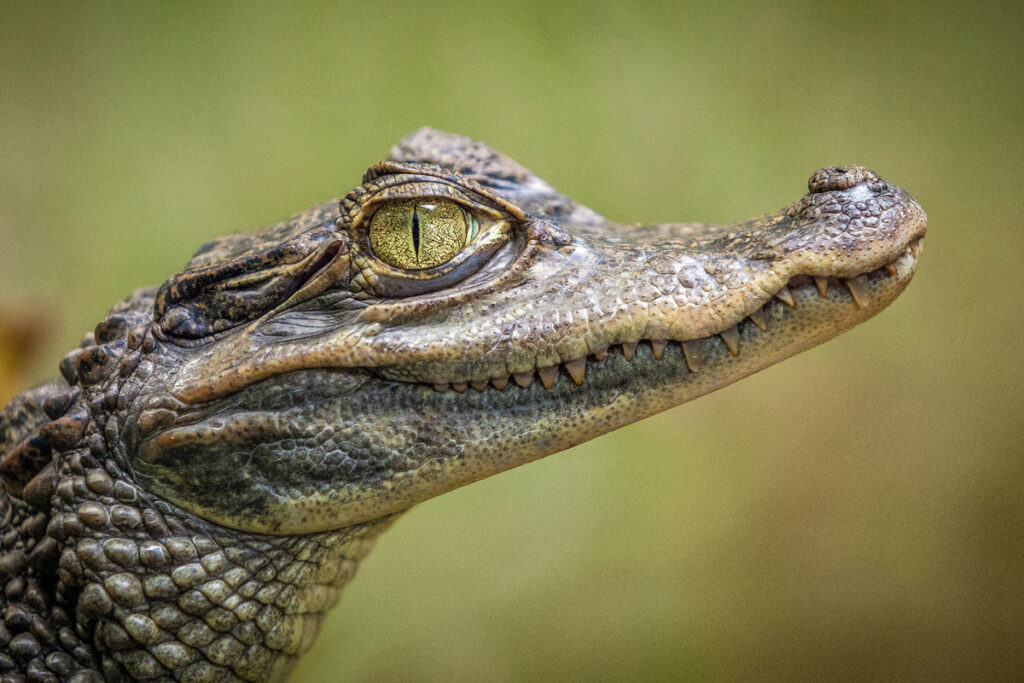
Eye placement is not the only factor: the shape of an animal’s pupil can also reveal whether it is more likely to be hunting or avoiding becoming a meal. Many ambush predators such as foxes and crocodiles have vertical slit pupils. These narrow openings help them control the amount of light entering the eye and, importantly, improve their distance judgement before striking. A cat stalking a mouse in tall grass, for example, can use its slit pupils to tell how far away its target is before it pounces.

Many grazing prey animals, though, such as goats, sheep, and horses, have horizontal pupils. This shape gives them a more panoramic view of their surroundings, and can also help them see and judge the terrain ahead should they need to move quickly in the name of danger. 

Image Credit: Getty Images/Unsplash.com

Vision Isn’t Everything

Perhaps surprisingly, not every predator follows the forward-facing eye rule. 

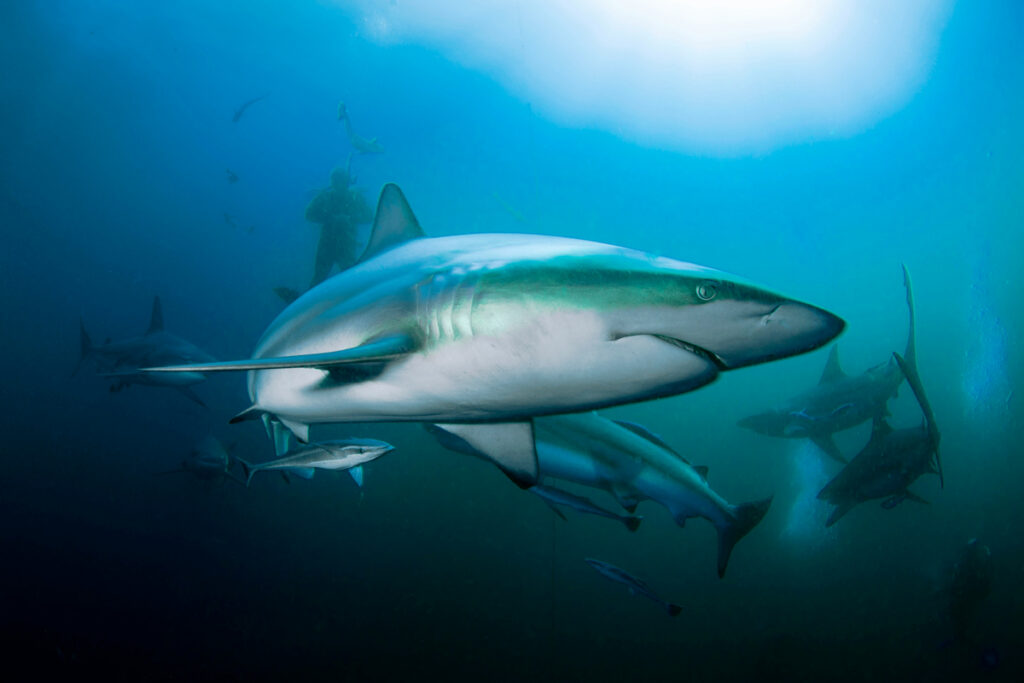
Sharks, for example, have eyes positioned on the sides of their heads. Rather than relying mainly on depth perception that front-facing eyes create (since water conditions can obscure their vision), sharks also hunt using their keen sense of smell, the ability to detect movement and vibrations in the water, and specialized organs that sense the faint, natural electrical signals produced in the cellular and muscle movements by nearby animals.

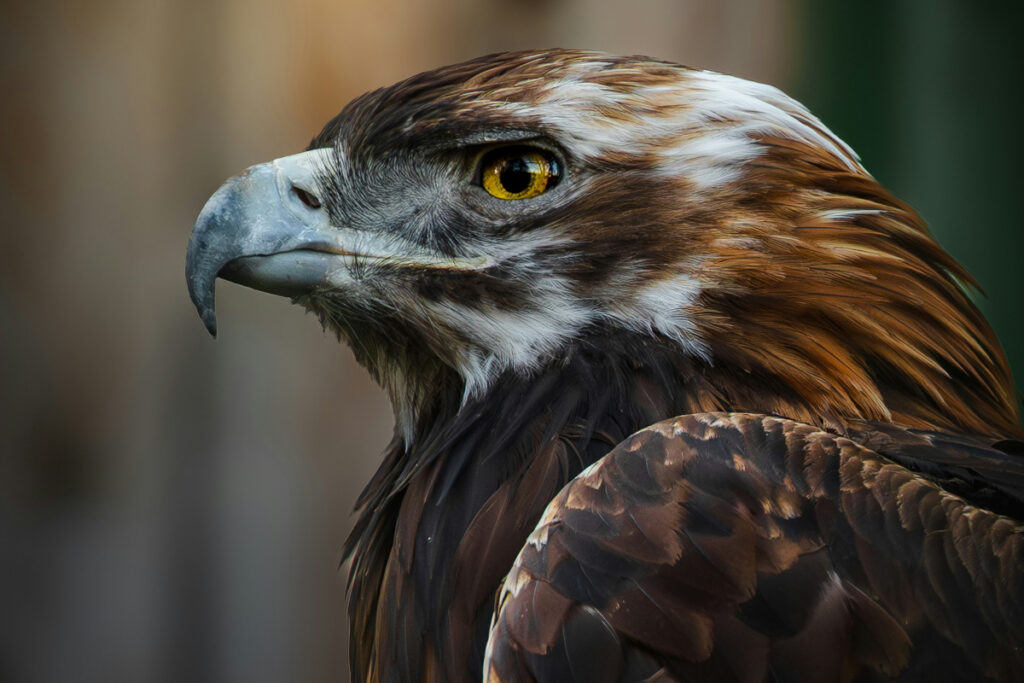
Survival depends on far more than eyesight alone. While the eyes provide unparalleled information about our surroundings, they’re just one part of a larger, more complex, sensory system. Even with the vision of an eagle, there is no single perfect eye — just the perfect one based on an animal’s environment, hunting needs, and self preservation.

Goats Have Rectangular Pupils

Image Credit: Jayson Hinrichsen/Unsplash.com

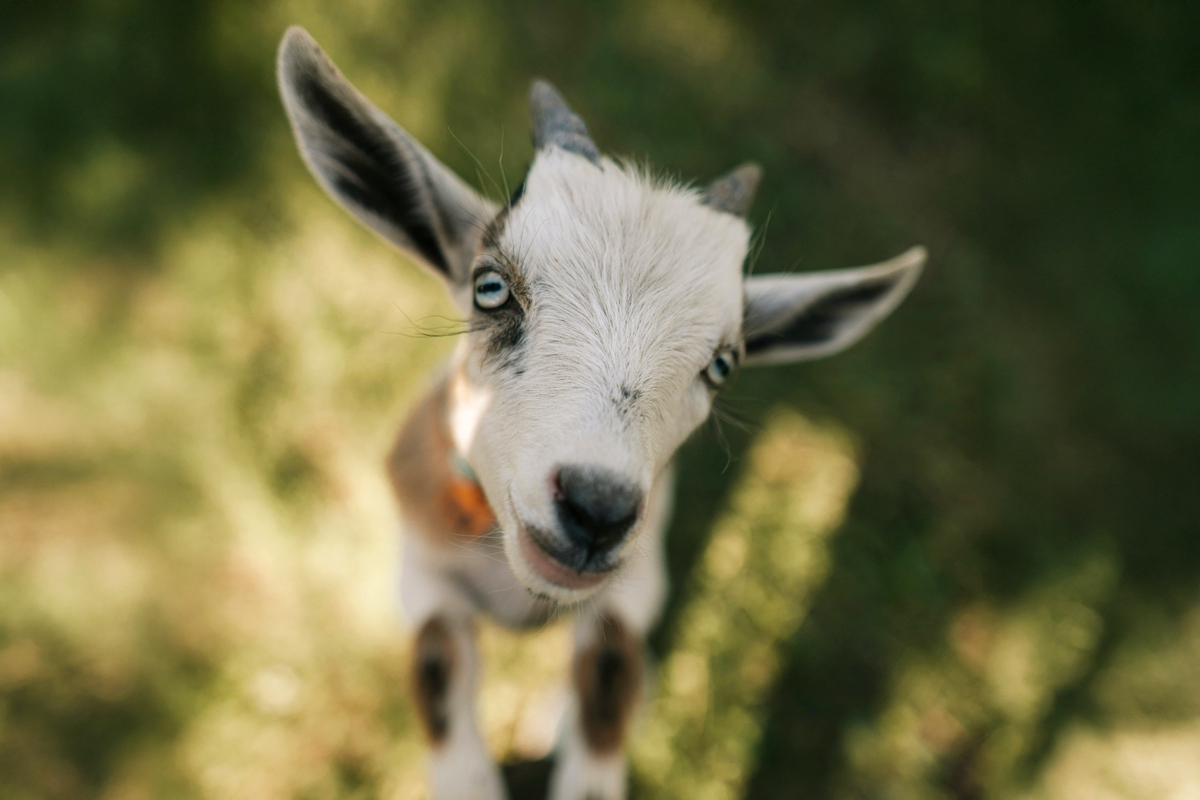
If you’ve ever found yourself trapped in a staring contest with a goat you might have noticed something fairly unusual. Goats have horizontal, rectangular pupils. They’re not alone, either. Sheep, deer, horses, and many other grazing animals share this oblong eye shape — and for good reason. Horizontal pupils give herbivores a panoramic view of the world, allowing them to scan for predators without lifting their heads from the ground while they graze. Their pupils even rotate as they tilt their heads, helping keep the horizon in focus. 

Predators, by contrast, often have vertical slit pupils that improve depth perception and help them judge the distance to their prey. Humans fall somewhere in between, with round pupils that provide balanced, even vision and accurate depth perception — much more suitable for a species that relies on hands rather than hooves.

Butterflies Are Grosser Than You Think

Image Credit: Boris Smokrovic/Unsplash.com

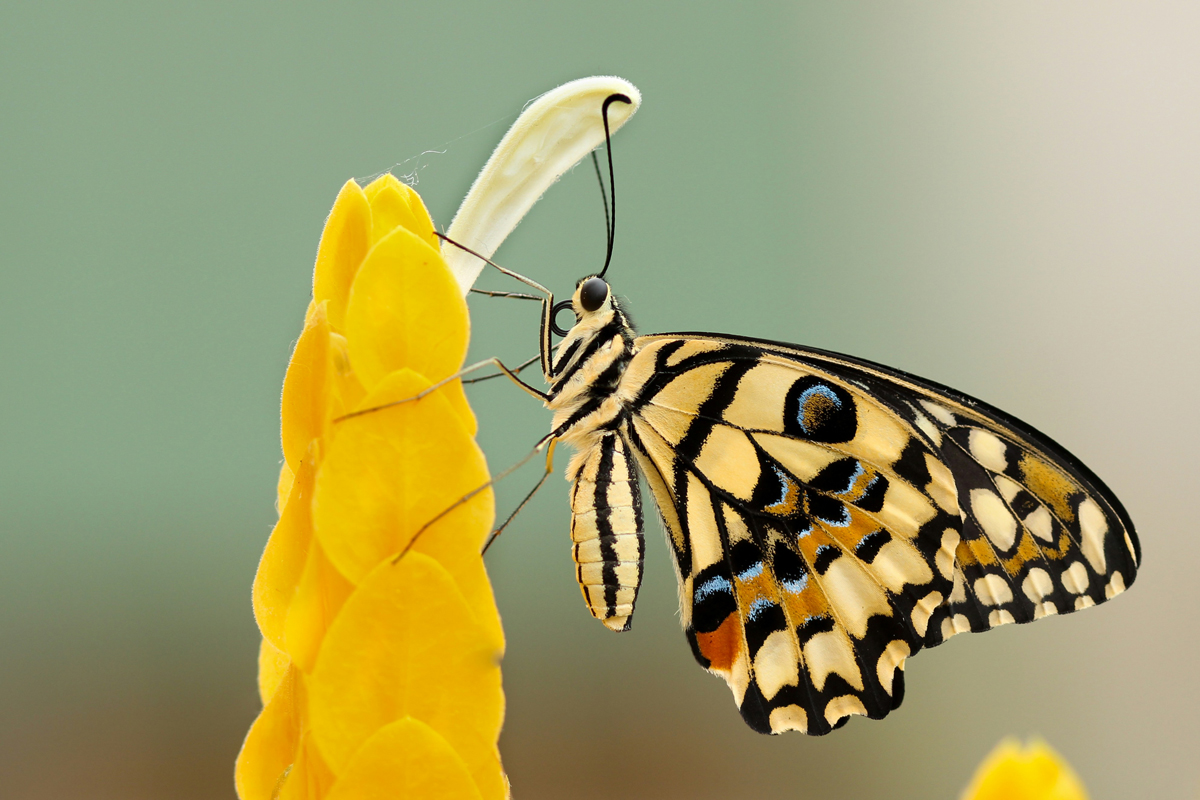
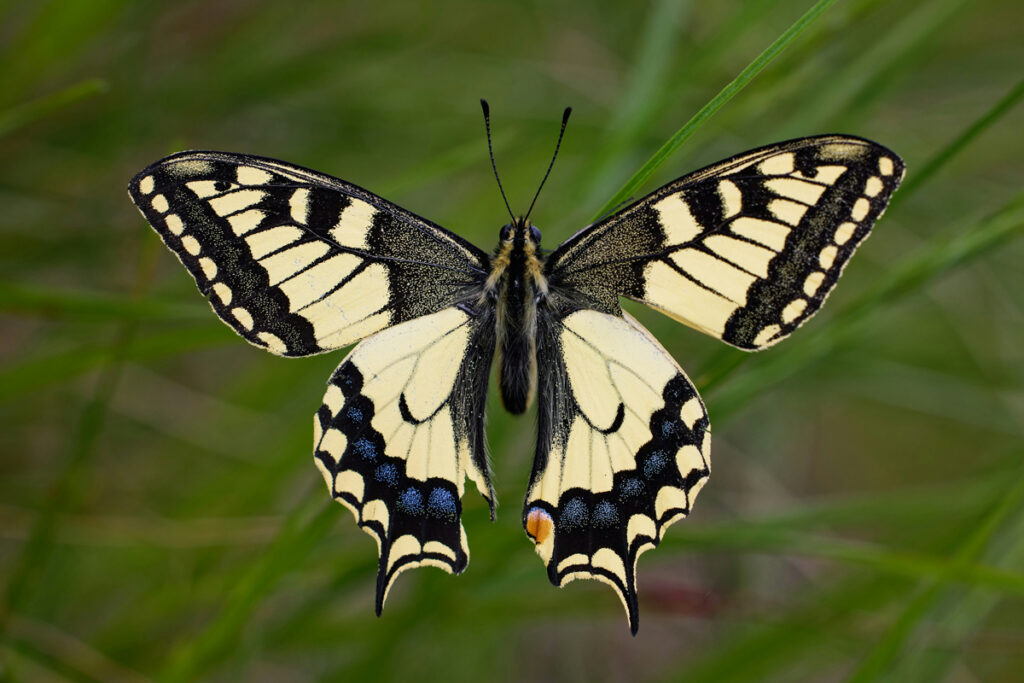
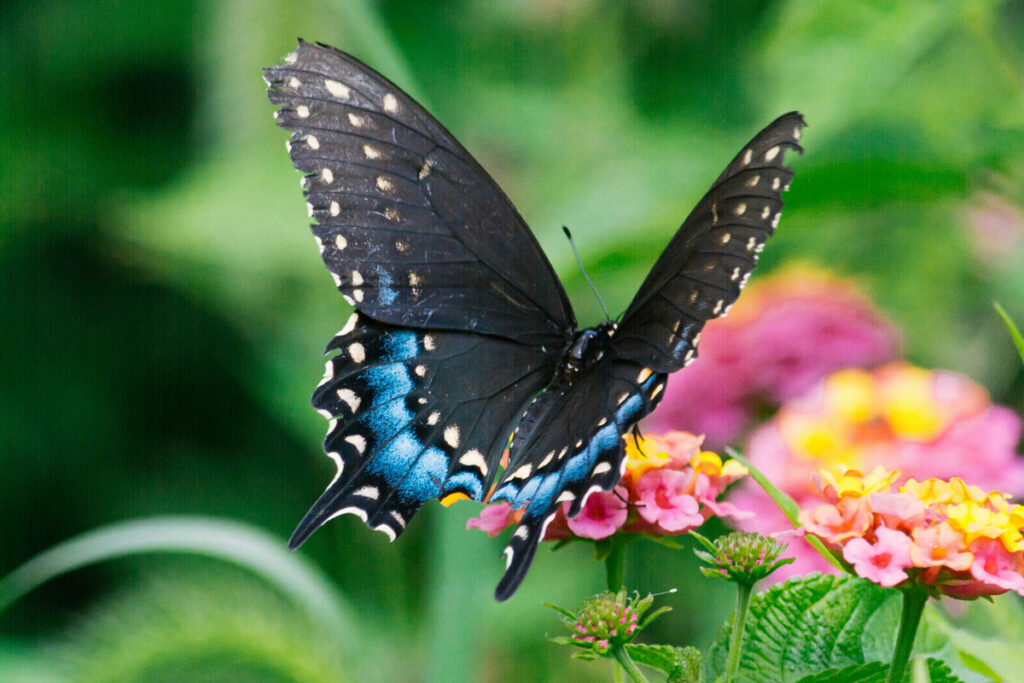
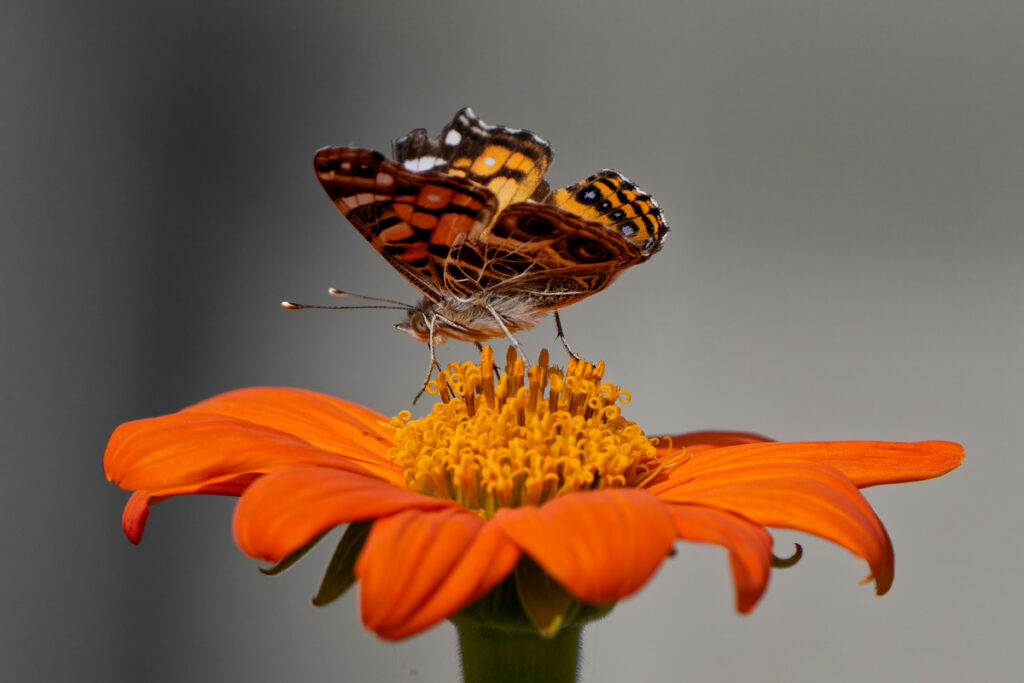
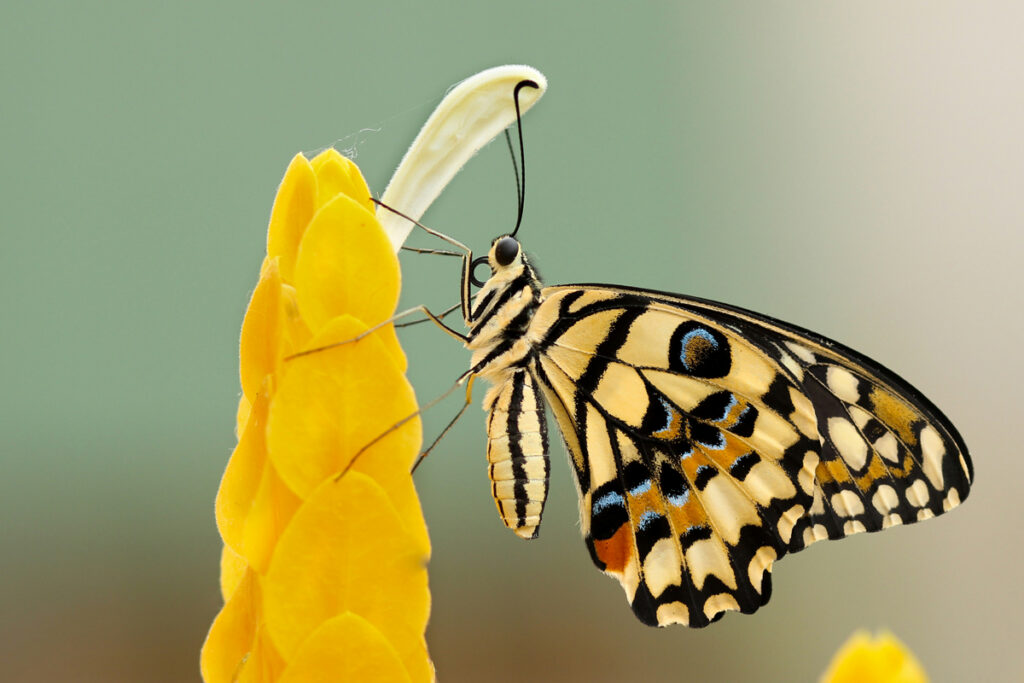
Butterflies may be pretty and graceful, but they’re far from the delicate, pristine creatures they may appear to be. In fact, some of their habits are downright gross. Butterflies eat mud, dung, and even each other. And that’s just scratching the surface. But despite these more unappetizing qualities, butterflies are still fascinating, and many of them have adapted some pretty neat evolutionary tricks to help them survive. 

Image Credit: Zdeněk Macháček/Unsplash.com

Some Start Off As Cannibals

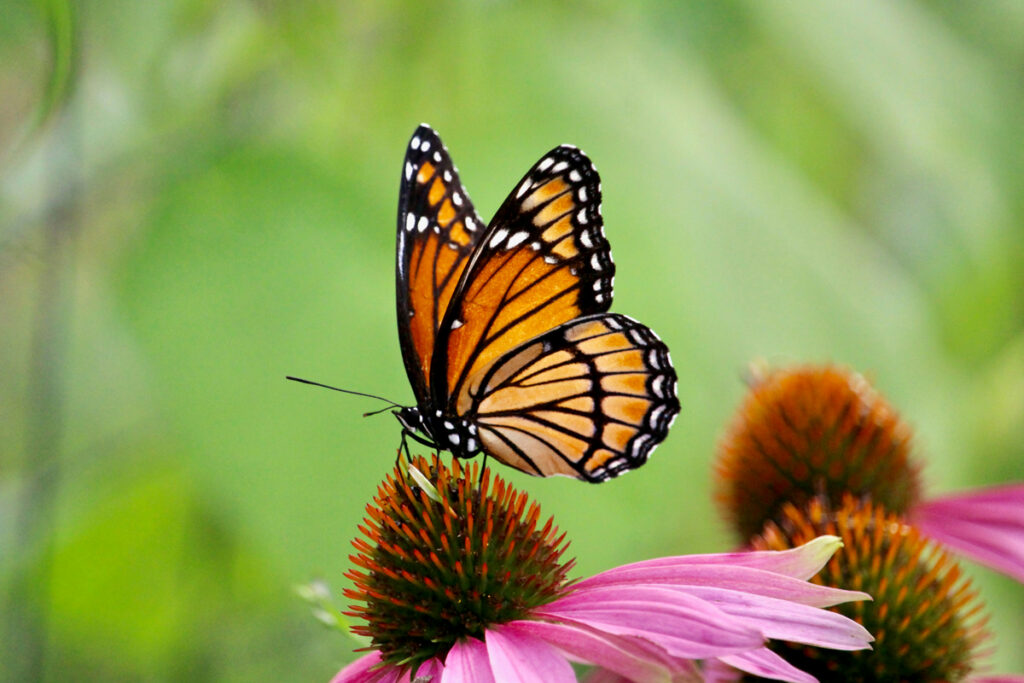
Butterflies may be symbols of beauty, but their earliest days are surprisingly brutal. Monarch caterpillars begin life by chewing their way out of their eggs. For some, the first meal isn’t a leaf — it’s the eggshell they just emerged from. Then, if nearby eggs haven’t hatched yet, they may move on to those as well, sometimes eating their own siblings before they’ve had a chance to emerge.

Female monarchs help reduce this sibling rivalry by scattering their eggs across multiple milkweed plants instead of laying them all in one place. Monarchs aren’t alone. While most caterpillars are plant eaters, some butterfly and moth species are active predators. The Harvester butterfly lays its eggs near aphid colonies, while several Australian and Asian species sneak into ant nests where their caterpillars feast on ant larvae.

Image Credit: cecile mousist/Unsplash.com

They Eat Mud and Dung

Flowers aren’t the only thing on a butterfly’s menu. They also eat decaying animals, mud, and fresh piles of poop. These meals sound grotesque to humans, but they’re chock-full of nutrients like salts and amino acids that plants don’t provide. The butterflies use a process called “mud puddling” — a common behavior that involves flocking to and fluttering in fresh dung, dead animals, or mud —to slurp up the nutrients available. Vileness aside, it’s an unexpectedly mesmerizing show.

Image Credit: Gayatri Malhotra/Unsplash.com

They Drink Tears and Urine

Mud puddling doesn’t always involve mud. Butterflies have been observed sipping tears from turtles and crocodiles, drinking from urine-soaked soil, and even filtering nutrients from sewage. While the menu sounds revolting to us, these salty fluids provide sodium and amino acids that nectar lacks.

Mud puddling and urine drinking are largely male behaviors. They use this strategy to gather sodium for their “nuptial gift” — a nutritious sperm package — that is passed on to females during reproduction.

Image Credit: Patrick Bigelow/Unsplash.com

They Get In Bar Fights

Butterflies may look delicate, but they’re surprisingly territorial. In Kenya, a group of white-barred butterflies was spotted boozing via the fermenting (and therefore alcohol-rich) sap from a fallen log. While most butterflies soaked up the sap, two hothead butterflies ended up in a deadly fight. They spiraled and sliced at each other, according to an entomologist at the scene. The battle ended with a pair of shredded wings.

This aggression doesn’t stop with the white-barred butterfly. The zebra longwing butterfly uses excess force when mating. These male butterflies swarm around the young females as they hatch from their chrysalis. The males fight and jostle ferociously for the chance to call dibs.

Image Credit:  Boris Smokrovic/Unsplash.com

Beer is Their Drink of Choice

While beer seems off brand for the elegant butterfly, it’s one of their favorite beverages on the market. Many gardeners use butterfly brew — a blend of bananas and beer like Guinness — to attract these graceful creatures to their gardens. Males are the primary beer drinkers. Just like the sodium in urine, male butterflies use the beer nutrients to pack extra goodies into their sperm package for future mates.

The Complex Anatomy of a Dog’s Nose

Image Credit: Vincent van Zalinge/Unsplash.com

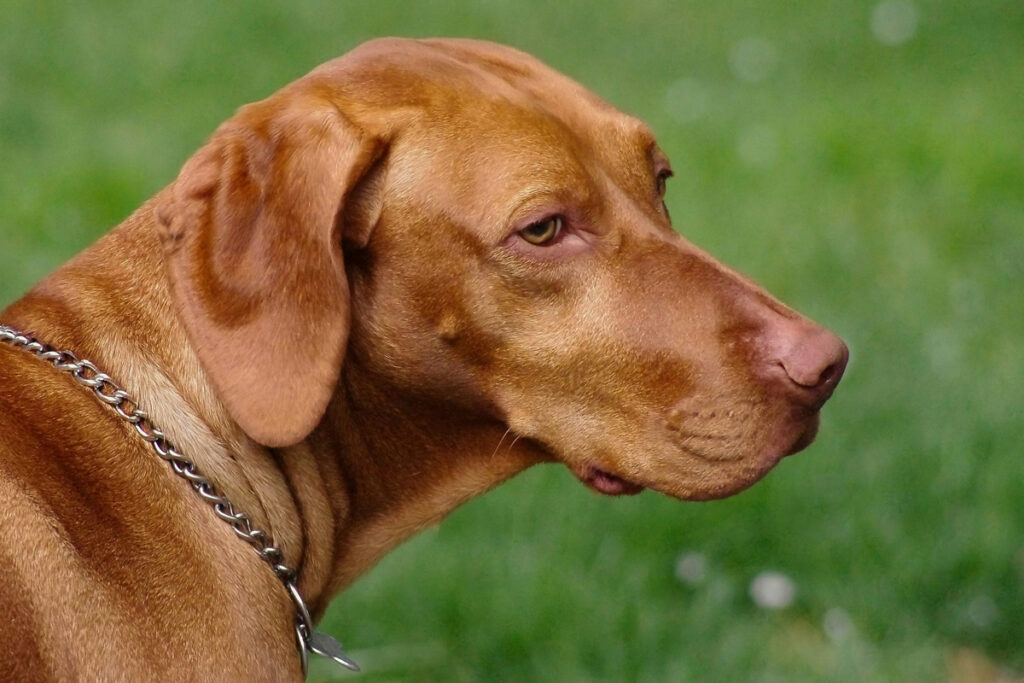
Have you ever watched a video of a dog reuniting with someone after a long time apart? Sometimes the recognition is instant. Other times, the dog seems almost… confused. Then the person gets close enough for a sniff and suddenly the tail starts wagging, the zoomies begin, and the happy tears flow. That’s because while dogs certainly use their eyes, it’s their noses that tell them who or what is standing in front of them.

This outstanding sense of smell originates from a complex anatomical structure: the nose. And while human noses have their own impressive feats, the canine nose has some features that make it stand out.

Credit:  Torben Gettermann/Unsplash.com

The Secret to a Stellar Sniffer

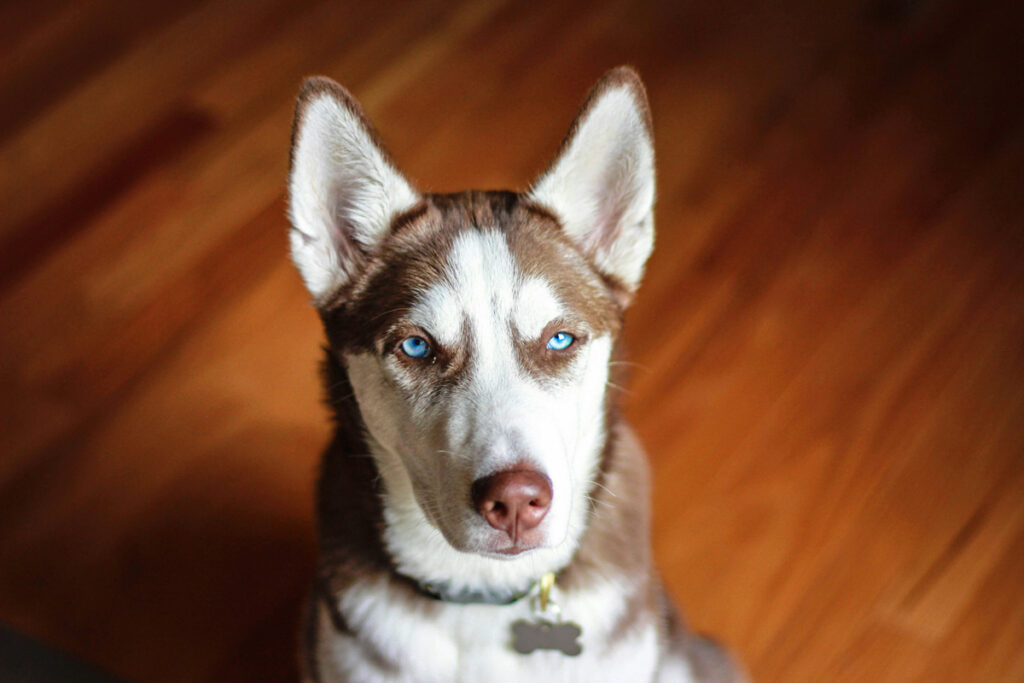
Both the interior and exterior of a dog’s nose work together to allow canines to smell, and therefore understand, the world around them. Like humans, dogs have two nares, or nostrils, which allow air to flow in and out. Unlike humans, however, their nostrils are flanked by lateral nasal slits, which actually allow dogs to exhale as they inhale. That means air can go in and out at the exact same time. This allows them to sniff without having to pause for breath-breaks.

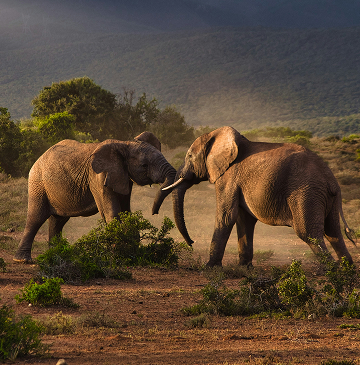
Once air has entered the inside of a dog’s nasal cavity, it has a few options. It can either go back out through the slits, move to the lungs and assist with breathing, or it can begin its journey through the olfactory system. Air that’s used strictly for scent detection is sent straight to the back of the nasal cavity along the roof of the mouth where it meets the Vomeronasal organ, otherwise known as the Jacobson’s organ. This organ is what sets a dog’s sense of smell apart from almost every other creature’s, minus the Grizzly bear and the African elephant, which are two of the few animals with stronger sniffers than canines. 

Image Credit: Erin Minuskin/Unsplash.com

Building a World From the Nose Up

The Jacobson’s organ detects semiochemical signals, like pheromones. These chemical substances are packed with information that help a dog understand what’s happening in real time. Semiochemicals in pee, for example, can tell a dog if the pee-taker before him is healthy or unwell, pregnant or in heat, or if she was just letting him know that this is her turf and he should steer clear. These chemicals also help dogs determine whether water is safe to drink, or if food has gone rancid, and even allow dogs to detect medical issues in humans, from low blood sugar, to oncoming seizures, to cancer. As if that weren’t impressive enough, these chemical cues help dogs map their lives by assigning meaning to certain people, places, and things. 

All the input from the Jacobson’s organ then makes its way to the accessory olfactory bulb in the back of the brain, where it’s essentially translated into information that the dog can use to make a decision. Some research suggests that this information also gets sent to the limbic system, which is where memory is stored. This could be why dogs remember certain people and animals, and may help them build a “map” of the world around them. 

Image Credit: DOYEOP KOO/Unsplash.com

Why Are Dog Noses Wet? 

There’s another part of a dog’s nose that plays a critical role in its function and appearance: that straight line that runs right down the middle of their two nostrils. That line has a purpose that extends beyond cosmetic, and actually helps pick up scent particles to send to the Jacobson’s organ for analysis. Called the philtrum, this little line not only aesthetically separates the nostrils, but it also divides the left and right airways. This break in cartilage allows each nostril to move independently albeit ever so slightly, which is all that’s needed. Each of a canine’s nostrils serves a certain purpose. Dogs start sniffing with their right nostril, taking in new scents to determine if they pose a danger. Familiar scents are passed through to the left nostril while unfamiliar or threatening scents stay in the right nostril to inform how the dog will react. The philtrum can actually point the right nostril farther to the right, and likewise with the left, allowing a dog to get a better whiff of whatever’s going on around them.  

Keeping the surface of the nose wet, or at least moist, can actually pick up more scent particles. The philtrum offers even more wetness to this surface because it works as a tiny crevasse, pooling up just the slightest amount of saliva every time a dog licks its own nose. So the next time you see your dog’s tongue touch its sniffer, just know that it’s all in an effort to stay updated on the latest scoop.