What’s the Difference Between Crocodiles and Alligators?
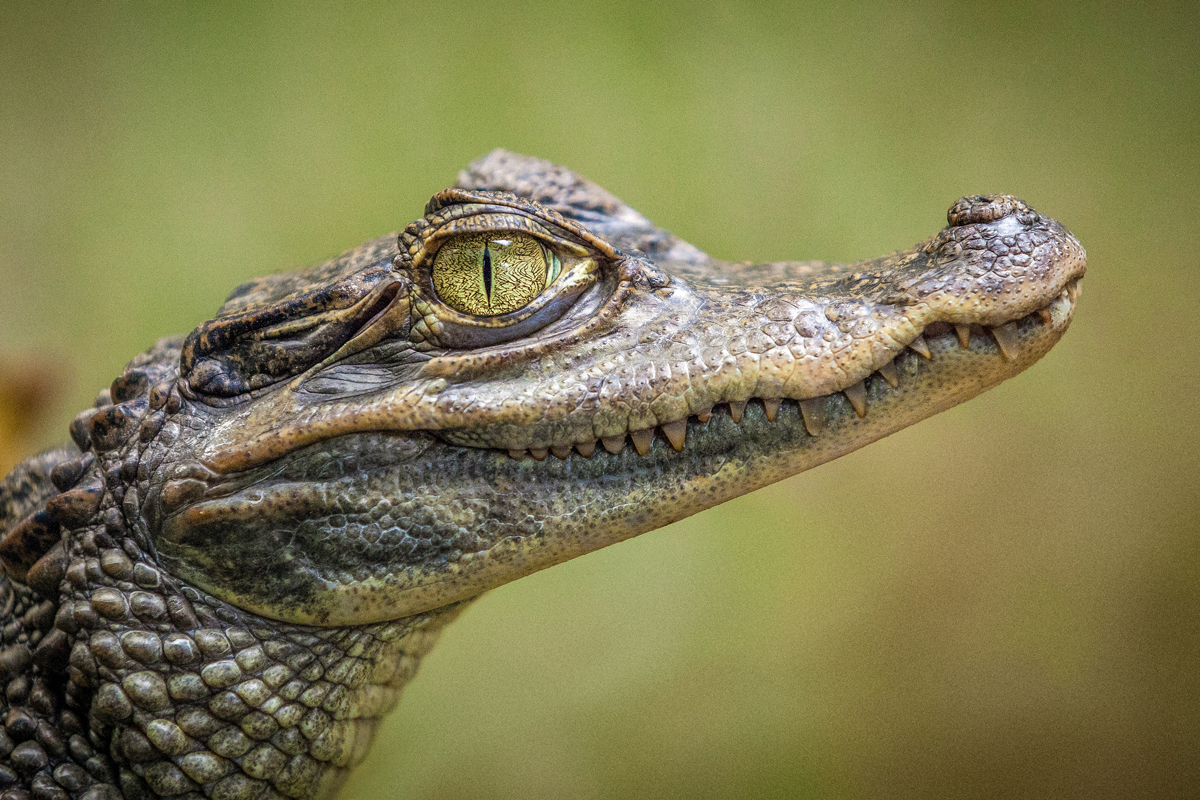

If you’re kayaking down a river and see a scaly creature with giant teeth pop up from the murky depths feet from your boat, you’d probably be more focused on paddling out of there than wondering if the creature is a crocodile or an alligator. Funnily enough, examining the jaw is one of the simplest ways to tell these similar reptiles apart. Their many similarities stem from the fact they both belong to the same reptilian order Crocodylia, and evolved from a common ancestor tens of millions of years ago. But they belong to disparate taxonomic families, and each took on unique characteristics during the evolutionary process. Here’s a closer look at how crocodiles and alligators differ.
Where in the World Is Caiman Sandiego?
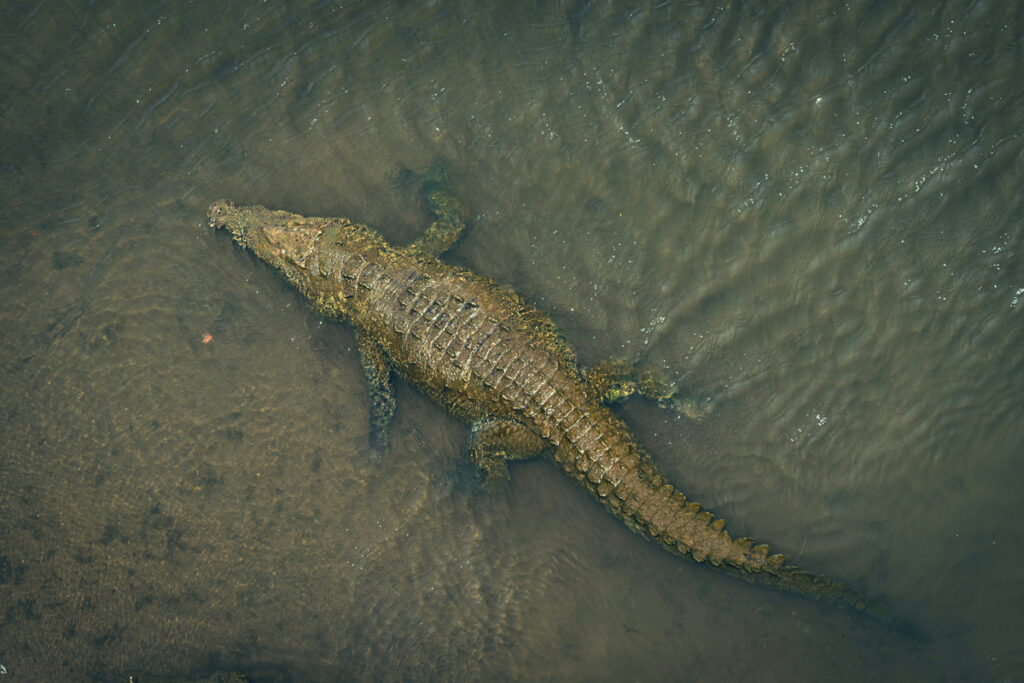
Despite their common origins, crocodiles and alligators wouldn’t make particularly compatible roommates, as they primarily live in starkly different habitats. Crocodiles typically prefer brackish (slightly salty) aquatic environments, whereas alligators require freshwater environments, as they can only tolerate saltwater for a few hours or days. The reason for this is that crocs have special tongue glands to remove excess salt, whereas alligators lack those same glands.
There’s only one place on the planet where crocodiles and alligators naturally co-exist. Much like many snowbird retirees, they live together around the Florida Everglades. The reason for this is a geographical coincidence, as the Everglades is made up of saltwater from the ocean and fresh water from nearby Lake Okeechobee, resulting in a suitable environment that fulfills the needs of both animals. This also happens to be the only location in the U.S. where you can see crocodiles in the wild, though you’ll find alligators in several other Southern states such as Louisiana, Texas, and Georgia.
Elsewhere around the globe, crocodiles have a far more expansive reach than alligators. With their ability to tolerate saltwater, crocodiles could traverse a greater number of interconnected waterways and spread out, while alligators were limited geographically to freshwater connections.
This map shows that various crocodile species are found in Central America, Northern South America, the Caribbean, Africa, South Asia, Southeast Asia, and the northern part of Australia. Alligators, on the other hand, are only found in the Southeastern U.S., Southern Central America, South America, and a small section of Eastern China.
A Dental Distinction
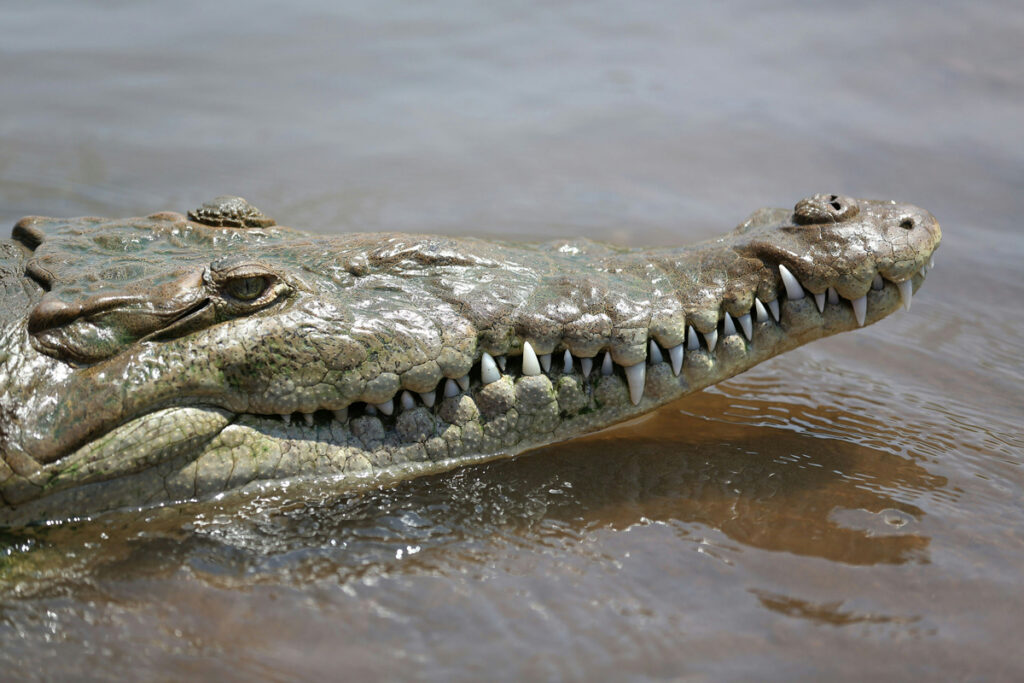
While on the surface, these large reptiles might appear similar, they have many key physical differences. One of the most overt differences is their snout shape. Crocodiles typically have a narrower snout that looks more like a pointed-V, while gators have a broader snout that looks akin to a rounded-U. There’s also a critically endangered crocodilian species known as the gharial, which boasts an exceptionally long and slender snout.
Another major distinction is the total number of teeth that crocodiles and alligators have. While us humans typically have 28 to 32 — perhaps less if you forgot to brush twice daily when you were younger — most crocodile species have 60 to 70 teeth while alligators have between 74 to 80.
But you can also tell them apart by how visible those teeth are when the animal’s jaw is shut. When a crocodile shuts its mouth, you’ll be able to see teeth coming from both its upper and lower jaws — especially the large fourth tooth on each side of the bottom jaw. When a gator shuts its jaw, however, you’ll be able to see its upper teeth but not its lower ones. Whether the jaw is open or not, if you’re up close and personal with a scaly reptile, you might not want to spend too much time counting teeth.
Size-wise, crocodiles are longer and heavier than alligators. The average male American crocodile tends to measure 14 to 20 feet in length while females measure eight to 12 feet, and they can weigh over one ton. But male American alligators typically measure around 11.2-feet-long while females measure around 8.2-feet-long, and they only weigh between 500 to 1,000 pounds. The average Chinese alligator is even smaller, at just five-feet-long and 50 pounds. No matter the size, you probably don’t want to encounter any of the above while swimming.
Lastly, there’s a difference in skin tone between the two creatures. Let’s take species that are native to the Americas; mature American crocodiles have skin that ranges in its color from greenish-gray to greenish-brown, with a pale underbelly to boot, and juvenile ones are lightly colored with dark stripes. The American alligator has skin that’s more akin to a darker grey or black color, while young gators appear to be dark with yellow stripes — kind of like a bumblebee or someone wearing a Pittsburgh Steelers jersey.
Don’t Poke the Reptile
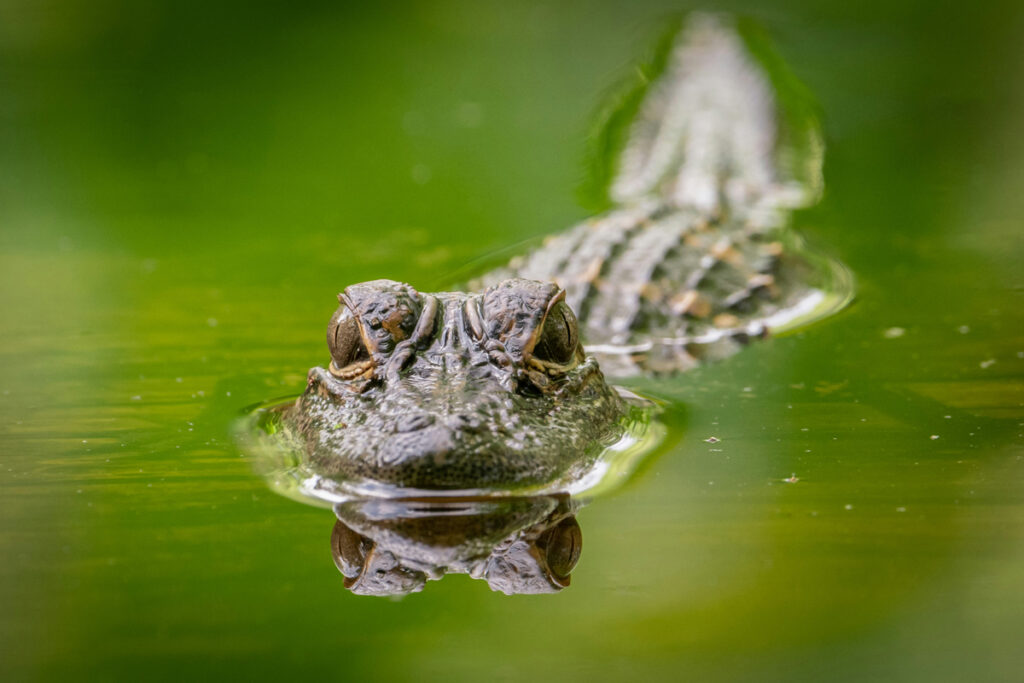
There tends to be a stark difference in the behavior and temperament of crocodiles and alligators. While they share many similar tendencies such as basking in the sun, hunting for prey, and performing signature “death rolls” upon catching something, the creatures are a bit dissimilar in terms of their aggression, especially toward humans.
Crocodiles are much more aggressive and territorial, similar to a friend who takes the board game Risk too seriously. This is especially true when it comes to certain species such as the African-based Nile crocodile and Asian saltwater crocodile. These are among the species known to approach human beings, posing a serious risk of danger.
Alligators, however, are comparably docile and reclusive, and are far less aggressive in the presence of humans. That said, it’s still worth keeping your distance if trying to snap a selfie with one. Alligators tend to only become antagonistic if they feel threatened or are protecting their nests, but will otherwise typically keep their distance.